
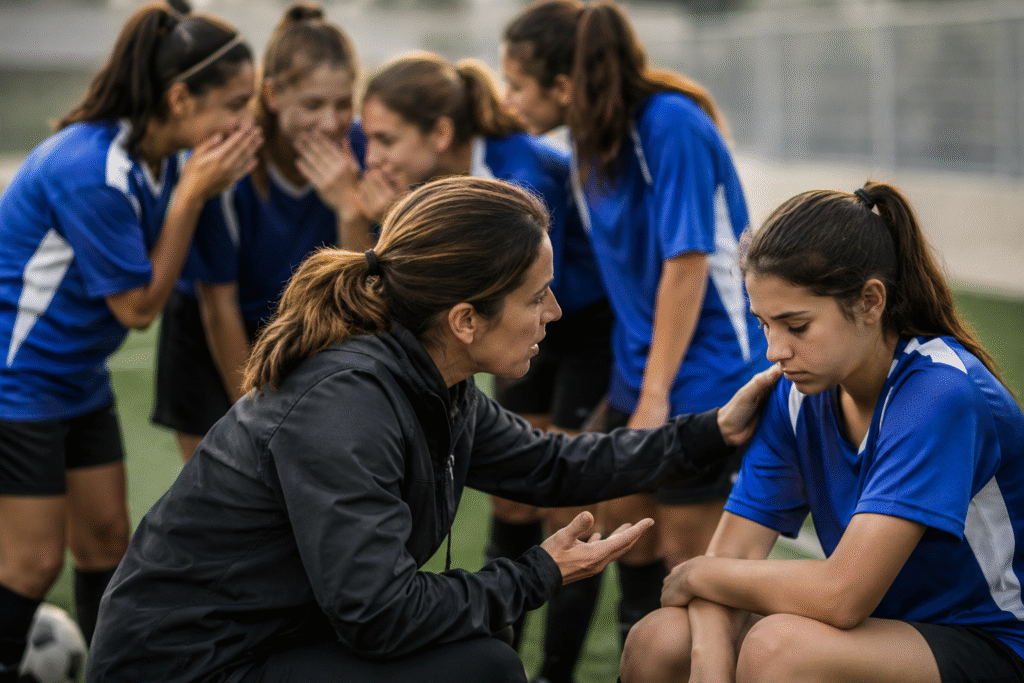
A coach usually notices the big things, the score, the missed opportunity, the sudden drop in performance. But sometimes the most important clue is much smaller, a young athlete starts playing differently because of who is watching. They stop asking questions, avoid taking risks, copy the behaviour of more influential players, or make decisions simply to fit in.
And because athletes rarely walk up to a coach and say, “I feel pressured by my teammates,” these changes can easily be mistaken for a bad phase, poor form, or lack of motivation.
As sports psychologists at MyMentalCoach, we believe coaches are in one of the best positions to spot peer pressure early because they see athletes not just when they perform, but in the small moments between drills, mistakes, conversations, and competition.
This blog will help you recognise those subtle changes, understand what may be driving them, and respond in a way that protects the athlete’s confidence while still helping them feel like a valued part of the team.
Peer Pressure in Sports Doesn’t Always Look Like Pressure
Most young athletes will never tell you, “Coach, I’m worried about what my teammates think of me.” Instead, you may notice something that feels slightly off. A player who normally backs themselves suddenly looks towards the group after making a mistake.
A cricketer starts playing shots they wouldn’t normally attempt when certain teammates are watching. A footballer who used to ask questions now stays quiet because they don’t want to appear like they don’t understand. A swimmer becomes obsessed with comparing times, or an athlete starts taking unnecessary risks just to look confident.
None of these things automatically mean peer pressure. But when you know an athlete well, you can usually sense when their behaviour has changed. That change is often the first thing worth paying attention to.
And here’s the important part: teammates influencing each other isn’t always a bad thing. A senior player encouraging a younger athlete to work harder, communicate better, or stay disciplined can be exactly what a good team environment should create.
The problem starts when an athlete feels they have to change who they are or ignore their own judgement to feel accepted. As a coach, don’t rush to label it or confront someone after noticing one incident.
Watch what happens over a few sessions. Does the athlete behave differently around a particular teammate? Are they making decisions for their own performance, or for approval? Sometimes, simply noticing that difference early—and giving the athlete a safe opportunity to talk—can prevent a small social pressure from becoming something that starts affecting their confidence, decisions, and enjoyment of the sport.
Learning to spot peer pressure early allows coaches to understand what may be driving an athlete’s behaviour before it begins affecting their confidence or performance.
Top 3 Ways to Spot Peer Pressure in Young Athletes
1. Notice When Their Behaviour Suddenly Changes
You know your athletes well enough to notice when something feels different. The player who normally asks, “Coach, can I try that again?” suddenly stops asking questions. The confident cricketer starts playing safe when a particular group is watching, or the footballer who usually takes responsibility begins looking towards teammates before making a decision.
These changes don’t automatically mean peer pressure—athletes have bad days, lose confidence, and go through phases. What matters is the pattern. If an athlete repeatedly behaves differently around certain teammates, becomes unusually concerned about making mistakes, or starts doing things that don’t match their usual personality, don’t ignore it.
As a coach, you don’t need to immediately identify the cause; simply noticing the change and becoming curious about it is often the first step to understanding what is happening.
2. Listen for the Need to Fit In
Sometimes an athlete will tell you what’s happening without realising they’re telling you. You might hear, “Everyone else does it,” “I can’t be the only one,” “They’ll think I’m scared,” or “I have to show them I can do it.” Don’t brush these comments off as ordinary team banter, but don’t turn them into a serious issue immediately either.
There may be a perfectly normal desire to belong, especially in a young team. The useful thing is to ask one more question instead of giving a lecture: “What do you think they’ll say if you don’t?” or “Would you still want to do it if nobody was watching?” Their answer can tell you whether they’re making a sporting decision because it feels right for them or because they’re worried about losing their place in the group.
That small conversation can reveal a lot more than simply asking, “Are your teammates pressuring you?”
3. Watch What Happens When Teammates Are Watching
Some athletes change the moment they have an audience. A player who normally makes sensible decisions suddenly tries the difficult shot. A younger athlete becomes louder, takes unnecessary risks, or refuses to admit they don’t understand a drill when senior teammates are nearby.
Others go the opposite way—they become overly cautious because they are terrified of being laughed at after a mistake. These moments are particularly useful for coaches because you can actually see the difference between the athlete’s usual behaviour and the behaviour they display for approval.
Don’t focus on one dramatic incident; watch what happens repeatedly. Ask yourself, “Would this athlete make the same decision if these teammates weren’t watching?” If the answer is consistently no, there may be something worth exploring.
That is often where a coach can spot peer pressure before it starts influencing confidence, decision-making, and enjoyment of the sport.
4 Ways Coaches Can Tackle Peer Pressure
1. Give Athletes Something of Their Own to Work Towards
When an athlete is constantly looking sideways at teammates, bring their attention back to something they can control. Instead of saying, “Don’t worry about what the others are doing,” give them one clear behavioural target for the session: “Today, I want you to communicate on every defensive play,” or “After every mistake, your job is to reset within the next few seconds.”
This gives the athlete something meaningful to measure themselves against. A young player who leaves training thinking, “I did what I came here to work on,” is far less dependent on whether a teammate praised them, noticed them, or performed better than them.
The aim isn’t to stop athletes from caring about their teammates; it’s to help them build an internal reference point for progress. One of the simplest ways to spot peer pressure is to give the athlete something measurable to focus on and see whether their attention returns to their own progress.
2. Teach Them What to Do When They Feel Judged
Telling an athlete “Don’t worry about what people think” is easy. Using that skill when five teammates are watching is much harder. Build these situations into training.
For example, let an athlete practise making a decision while others are watching, deliberately create a situation where they might make a mistake, and then help them refocus on the next action rather than the reaction from the group.
You can also give them simple responses they can use when teammates push them towards something they aren’t comfortable with—“I’m going to do it my way,” “That’s not what I’m working on today,” or even simply walking away from the conversation. The more familiar these responses become in training, the easier it is for an athlete to use them when the pressure is real. Helping athletes recognise these moments also makes it easier for coaches to spot peer pressure before it starts influencing important decisions.
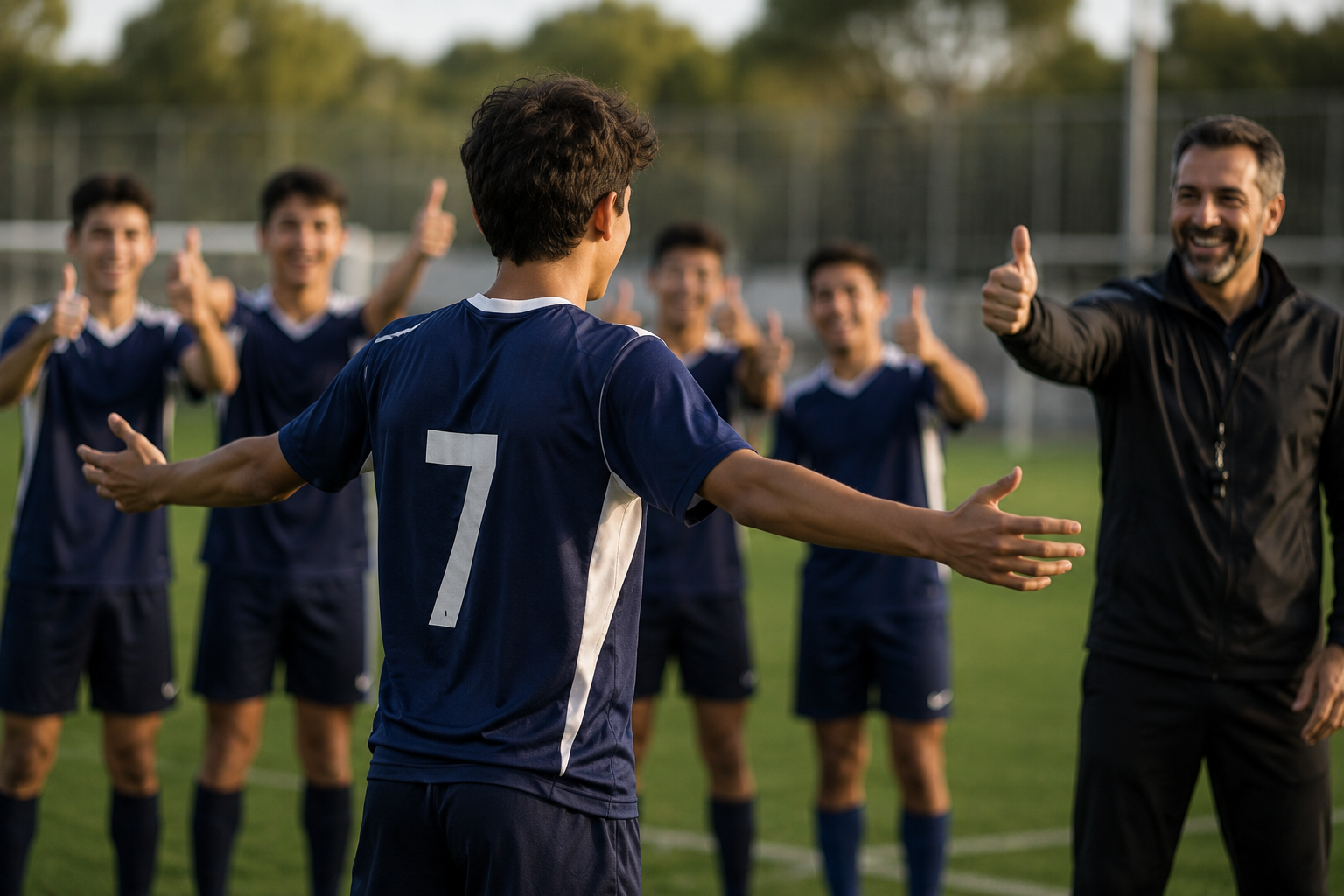
3. Make Your Training Ground a Place Where Athletes Can Get Things Wrong
A healthy training environment makes it easier to spot peer pressure because athletes are more likely to speak honestly about what they are experiencing. A young athlete who gets laughed at every time they make a mistake will eventually stop taking risks, asking questions, or trying something unfamiliar.
Coaches don’t need to make training completely comfortable—athletes should still be challenged—but they should know that one poor pass, missed shot, or wrong decision won’t become a source of embarrassment. Pay attention to how teammates react when someone makes an error. Stop mocking or unnecessary comments early, and model the kind of feedback you want athletes to give each other.
Even something as simple as making “What did you see there?” more common than “How could you miss that?” changes the conversation. When asking for help is normal and mistakes are treated as part of learning, athletes have much less reason to hide behind the group or change their behaviour just to avoid being judged.
4. Understand the Athlete Before You Try to Change the Team
It can feel extremely important to immediately confront a teammate, call out the group, or decide that one athlete is a “bad influence.” Sometimes that is necessary, but it shouldn’t be the first response.
Start with the athlete who seems to be struggling. Speak to them privately, away from teammates, and find out what is actually happening from their perspective. “What happens when you’re around them?” “Is there something you feel you have to do to fit in?” “What would you like me to help you with?” Their answers may surprise you.
What looks like peer pressure from the outside could be a simple misunderstanding, a friendship issue, fear of being excluded, or a genuine concern about how the group sees them. Once you understand the situation, you can decide whether the athlete needs confidence-building, a conversation with the team, clearer boundaries, or support from parents or a sports psychologist.
The goal isn’t to isolate the athlete from their teammates; it’s to help them stay connected to the team without losing their own judgement. Taking time to understand the athlete’s experience is often the best way to spot peer pressure without making assumptions about the teammate involved.
Before trying to fix the situation, give the athlete space to speak openly about what they are experiencing. The way a coach communicates can determine how comfortable an athlete feels asking for help or sharing concerns.
For more on this, read “How a Coach-Athlete Communication Style Shapes an Athlete’s Performance” and see how communication can influence trust, confidence, and performance.
When Peer Pressure Starts Affecting Performance
The real warning sign is often not what an athlete does—it is what they stop doing. They stop volunteering for a drill, stop trying a skill they used to enjoy, stop speaking up when they are confused, or stop taking the kind of risks that helped them improve.
For a coach, these small changes can be easy to overlook because the athlete may still be attending every session and completing the drills. But if you notice an athlete becoming more focused on how they will look than how they can improve, it is worth paying attention. This is where coaches can spot peer pressure through the loss of natural behaviour rather than waiting for an obvious incident.
If that pattern begins affecting participation, confidence, or performance over time, bring the athlete into a private conversation and, when needed, involve the parent or a sports psychologist.
The earlier you understand what is happening, the easier it is to help the athlete regain their freedom to learn, experiment, and compete without feeling that every decision has to earn the group’s approval.
Helping Athletes Stay Themselves While Being Part of a Team
Being part of a team doesn’t mean thinking, playing, or behaving exactly like everyone else. A confident athlete can listen to teammates, learn from stronger players, and still trust their own judgement when it matters.
Coaches can create this balance by making it safe to ask questions, make mistakes, have a different playing style, or choose a different approach without feeling excluded. When athletes know they don’t have to earn acceptance by copying others, they become more comfortable making their own decisions and handling emotions when things don’t go their way.
That confidence and emotional control matter far beyond peer pressure—they help athletes stay composed, think clearly, and perform under pressure when the game gets difficult.
How MyMentalCoach Helps Coaches Build Mentally Strong Athletes
The best coaches don’t just notice whether an athlete is performing well, they notice when something has changed underneath the performance. Peer pressure may not always be obvious, but when you know your athletes, you can often spot peer pressure through small shifts: a player who stops taking risks, a young athlete who suddenly needs approval before making a decision, or someone who no longer seems like themselves around certain teammates.
You don’t have to control every interaction or protect athletes from every influence. Your role is to help them develop enough confidence and self-awareness to make their own decisions, stay connected to the team, and still remain true to themselves.
Sometimes, simply noticing, listening, and asking the right question at the right time can make a bigger difference than a coach realises.
At MyMentalCoach, we work with coaches and academies to bring the mental side of athlete development into everyday training. Helping athletes develop confidence, focus, emotional regulation, resilience, communication, and the ability to perform under pressure is essential.
Mental training isn’t something athletes should turn to only when they are struggling, it can be built alongside their sporting development from the beginning.
If you’re a coach or academy looking to strengthen the mental game of your athletes, book a FREE 15-minute call with MyMentalCoach and let’s explore how we can support your athletes.

