
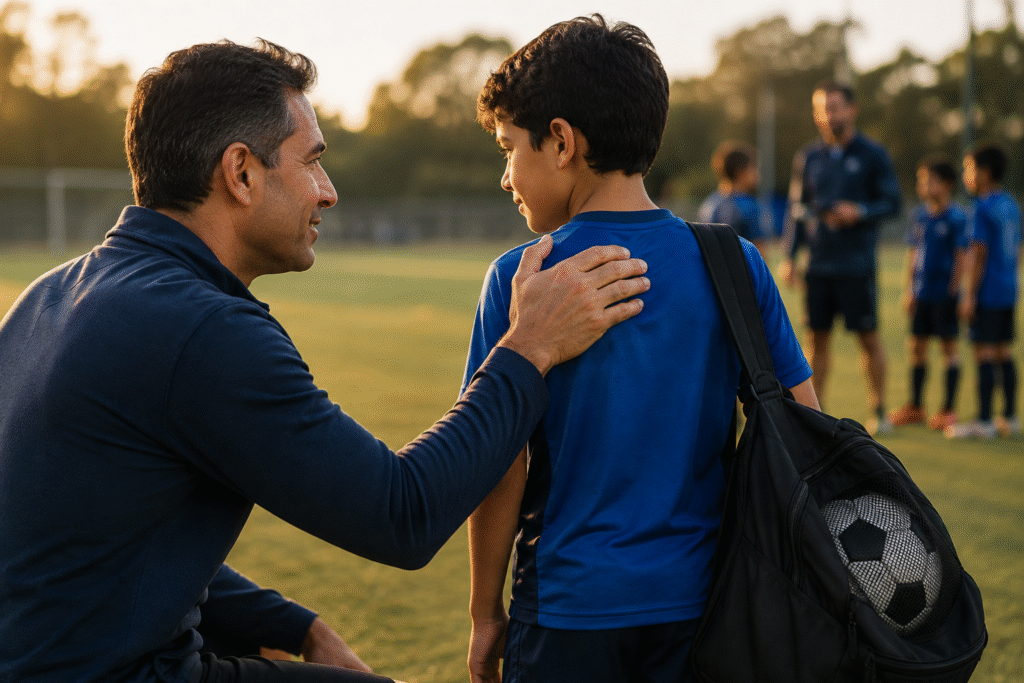
Should you step in, stay silent, or trust the process when your child gets a new coach? As a sports parent, watching your child start with a new coach can be both exciting and unsettling. One day they seem eager to begin, and the next they’re quieter after training, unsure of where they stand or whether they’re meeting expectations. In those moments, it’s easy to wonder if you should step in, ask questions, or simply wait.
But as sports psychologists at MyMentalCoach, we’ve seen that beginning with new coach is often one of the most important transitions in an athlete’s journey, not because it changes their technique overnight, but because it shapes their confidence, trust, and willingness to learn.
The way parents respond during this phase can either make the transition smoother or unintentionally make it harder.
In this blog, you’ll discover how to support your child through this change in a way that strengthens the coach-athlete relationship and helps them settle, grow, and enjoy their sport with confidence.
Why Beginning With New Coach Can Feel Overwhelming
Every athlete experiences uncertainty while beginning with a new coach, but the support they receive from home often determines how confidently they move through this transition. The first few weeks with a new coach can be surprisingly emotional, not just for the athlete, but for the parent too.
As a sports parent, you’ve probably spent months or even years watching your child train under a familiar coach who understood their strengths, personality, and way of learning. Suddenly, everything changes. The training looks different, the coach communicates differently, and your child may come home quieter than usual or unsure about how they’re performing.
It’s completely natural for questions to start racing through your mind: “Will my child fit into this environment?” “Will the coach recognise their potential?” “Should I speak to the coach now or wait?” These thoughts don’t come from being overprotective—they come from wanting the best for your child. But it’s important to remember that beginning with a new coach is a period of adjustment, not a judgment of your child’s ability.
What many parents don’t realise is that children often take emotional cues from them during times of change. If a parent becomes anxious after every training session, questions every coaching decision, or expects immediate results, the child begins to believe that something is wrong, even when they’re adapting exactly as they should.
Think of the first few weeks like the first chapter of a new book. The coach is learning how your child responds to feedback, behaves under pressure, and interacts with teammates, while your child is learning the coach’s expectations, routines, and style of communication.
Trust isn’t built in a single session; it’s built through repeated interactions. The parents who make the biggest positive difference are often the ones who stay patient, remain emotionally steady, and allow this relationship to grow naturally. That sense of calm gives young athletes the confidence to settle in, enjoy the process, and eventually perform at their best.
3 Mistakes Sports Parents Make When Their Child Gets a New Coach
1. Don’t Let First Impressions Become Final Judgments
It’s natural to come home after the first few training sessions and wonder whether your child has made the right move. Perhaps the new coach is stricter, speaks less, gives more individual feedback to some athletes, or runs training very differently from the previous coach.
Many parents immediately begin comparing: “Our old coach never did this,” or “My child seemed happier before.” But the reality is that a coach cannot understand an athlete’s personality, learning style, strengths, or emotional triggers in just one or two sessions.
Similarly, your child is still learning what the coach expects, how feedback is given, and what success looks like in this new environment. During these early weeks, patience is far more valuable than quick conclusions.
When parents avoid judging too soon, they give both the coach and the athlete the space needed to build trust naturally. More often than not, it’s this patience—not pressure—that creates the strongest foundation for long-term growth.
2. Let Your Child Build Their Own Relationship With the Coach
One of the biggest gifts a sports parent can give their child is the opportunity to develop their own relationship with the coach. It feels like you need to step in when your child says, “Coach didn’t notice me today,” or “I don’t think Coach likes me.”
Your first instinct may be to explain the coach’s behaviour or even speak to them directly. But every time parents become the bridge between the athlete and the coach, children lose an opportunity to build confidence in communicating for themselves. Instead, encourage your child to ask respectful questions, seek clarification when they’re unsure, and stay open to feedback, even if it’s difficult to hear.
Equally important, avoid criticising the coach or questioning their methods at home. When children hear one message from their coach and another from their parents, they don’t know who to trust. That confusion often creates hesitation during training, making it harder for them to adapt, learn, and enjoy the sport.
3. Remember: The Goal Isn’t a Perfect Start, It’s a Strong Relationship
Many parents unknowingly judge the success of a new coaching relationship by what happens in the first few weeks. Is my child getting enough attention? Have they been selected? Are they performing better already? But the strongest coach-athlete relationships rarely begin with immediate results—they begin with consistency.
A coach who learns that your child listens carefully, arrives prepared, accepts feedback positively, and keeps showing up with the right attitude will gradually invest more time and trust in them. Likewise, when parents remain calm instead of reacting to every training session, children feel secure enough to focus on learning rather than proving themselves.
Over time, trust, communication, patience, and mutual respect become far more important than how the first month looked. Playing time, confidence, and performance often improve as a result of that relationship—not before it. As sports psychologists, we’ve seen that the athletes who thrive are usually supported by parents who trust the process, even when progress isn’t immediately visible.
During the transition to a new coach, children often look to their parents for reassurance before they look to anyone else. Understanding how your words, reactions, and expectations affect your child can make this transition much smoother. Read our blog, How Parent Pressure on Child in Sports Quietly Steals the Joy of the Game & One Simple Strategy to Bring It Back

Beginning With New Coach: 3 Things Every Sports Parent Must Do
1. Give the Coach and Your Child Time to Build Trust
One of the biggest mistakes sports parents make is expecting the coach-athlete relationship to click immediately. After one or two sessions, it’s easy to wonder why the coach hasn’t spoken much to your child, corrected them individually, or recognised their strengths.
But remember, a coach isn’t just assessing technique—they’re observing attitude, discipline, willingness to learn, how your child responds to feedback, and how they interact with teammates. At the same time, your child is trying to understand a completely new coaching style, training routine, and set of expectations.
Instead of stepping in at the first sign of discomfort, encourage your child to ask questions, clarify instructions, and gradually build their own relationship with the coach. Trust isn’t built through one conversation; it’s built through repeated positive interactions.
Parents who stay patient during this phase give both the coach and the athlete the time they need to understand each other, helping children settle in with greater confidence and less anxiety. Remember, beginning with new coach is about building understanding before expecting outstanding performance.
2. Support the Transition, Not Just the Performance
Beginning with new coach is about building understanding before expecting outstanding performance. During the first few weeks with a new coach, many parents naturally look for signs that the change is working. “Did you get selected?” “Did Coach praise you today?” “Did you perform better than last week?” While these questions come from a place of care, they can unintentionally make children feel that they need to prove themselves immediately.
The reality is that the early stage of any coaching change is about adapting, not impressing. Instead of focusing only on results, ask questions like, “What did you learn today?” “What’s becoming easier?” “What surprised you in training?” These conversations shift your child’s attention towards progress rather than pressure.
Athletes who spend the first few weeks understanding new drills, adjusting to expectations, and becoming comfortable in the environment usually develop stronger confidence later. Performance is often a result of successful adaptation, not the starting point.
3. Create One Team Around Your Child
When a child changes coaches, they don’t just need support at training, they need stability at home. New drills, unfamiliar teammates, different coaching methods, and higher expectations already require a lot of mental energy.
Home should be the one place where they don’t feel they’re being evaluated again. Resist the temptation to analyse every training session in the car or compare today’s coach with yesterday’s. Sometimes the most powerful thing you can do is simply listen. Equally important is the relationship you build with the coach. Trust their professional decisions, communicate respectfully when needed, and avoid giving technical instructions that contradict what your child is learning in training.
Children perform best when they receive one clear message, not two competing ones. The smoother the communication between home and training, the easier beginning with a new coach becomes for young athletes.
When parents and coaches work together instead of pulling in different directions, young athletes feel secure, adapt more quickly, and develop the confidence to enjoy the sport while continuing to grow.
The Parent-Coach Relationship Shapes the Athlete’s Confidence
Young athletes pay attention to much more than what happens during training—they quietly observe how the two most influential adults in their sporting journey interact with each other. They notice the expression on your face when the coach gives feedback. They hear the conversations in the car after practice. They pick up on comments like, “I don’t know why Coach made you do that,” or “I don’t think Coach understands your game.” Even when those remarks are made casually, children begin to question the person they’re supposed to learn from.
As sports psychologists, we’ve often seen athletes become hesitant, second-guess instructions, or lose confidence—not because of anything the coach did, but because they felt caught between two different opinions.
When parents show trust, stay respectful, and give the coach the space to do their job, children feel emotionally safe enough to commit fully to the learning process instead of worrying about who is right.
When beginning with new coach, children look for signs that the important adults in their sporting journey trust one another—and that trust often becomes their own.
The strongest sporting environments are created when parents and coaches see themselves as partners, not evaluators of each other. Their roles are different but equally important: the coach develops the athlete’s performance, while the parent provides emotional stability that allows the athlete to learn, recover, and keep showing up with confidence. This doesn’t mean parents should never ask questions or raise concerns. It means choosing the right time, approaching conversations with curiosity instead of emotion, and remembering that every discussion should have one purpose—helping the child grow.
When children see mutual respect between the adults they trust most, they stop worrying about pleasing everyone and start focusing on becoming better athletes. Over time, that sense of security doesn’t just improve performance; it helps them enjoy the sport more, build stronger relationships, and develop confidence that lasts well beyond the playing field.
How MyMentalCoach Helps Sports Parents Navigate Coaching Transitions
Beginning with new coach is rarely just a change for the athlete—it is a transition for the entire family. The way parents respond during this phase can shape how confidently their child adapts, learns, and enjoys the sport.
There won’t always be perfect training sessions or immediate results, but there can be consistent support, patience, and trust. When parents focus on helping their child settle into the new environment instead of expecting instant success, they create the emotional stability every young athlete needs.
It is this partnership between the athlete, coach, and parent that lays the foundation for long-term development, resilience, and performance.
At MyMentalCoach, we help sports parents become confident partners in their child’s sporting journey. Understanding that peak performance is built not only through physical training but also through the right support system is important.
Our sports psychology programmes help parents understand how children adapt to change, what they need emotionally during coaching transitions, how to communicate effectively, and how to build confidence without adding pressure.
If you’re beginning with a new coach and want to support your child in the best possible way, book a FREE 15-minute call or WhatsApp us on +91 98237 91323 and take the first step towards building a stronger athlete, a stronger parent, and a stronger coach-parent partnership.