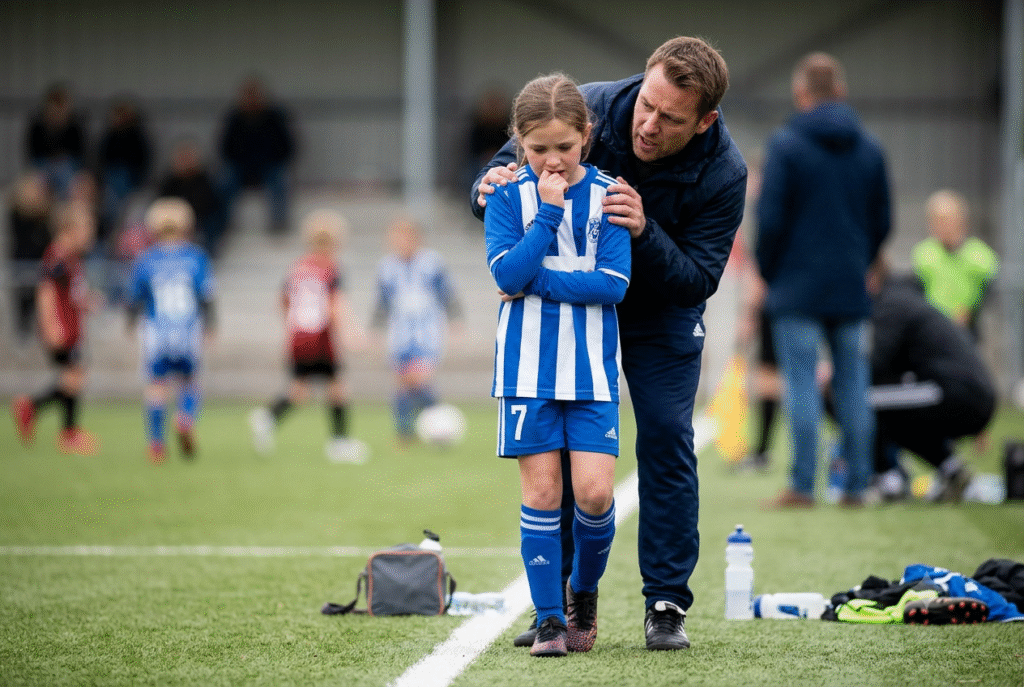
Your child has a selection trial tomorrow. You have seen how hard they have trained, how seriously they have taken every practice session and how much making the team would mean to them.
So, before they leave, you say, “Give your best!” It sounds like the right thing to say, doesn’t it? But what if your child is already trying their hardest and what they really need is something different from you?
As Dr. Swaroop Savanur, sports psychologist, Mental Conditioning and Peak Performance Coach, explains through his work in athlete development, how young athletes experience pressure matters just as much as how they prepare for competition.
At MyMentalCoach, we recognise that the words parents choose before selection trials can influence how children approach these important moments.
Let’s look at why “give your best” may not always be the reassurance parents intend it to be, and what you can say instead to help your child feel supported, whatever the outcome.
Your Child Already Knows This Is Important
Selection trials are approaching, and your child has been putting in the hours at practice. They know how much this opportunity matters, who they are competing against, and what they hope to achieve.
As they get ready to leave, you say, “Just give your best!” You mean it as encouragement. You want them to feel confident and remember that their efforts will count. But from your child’s perspective, the pressure may already be building.
They may be wondering whether they will perform as well as they do in practice, whether the selectors will notice their strengths, or whether one mistake could affect their chances of getting selected.
In that moment, hearing “give your best” again may not make them feel more prepared. It may simply remind them of how much they have at stake.
The difficulty is not that these words are wrong. It is that “give your best” does not tell an athlete how to handle the thoughts and pressure that can arise during an important performance.
A young cricketer may know they need to focus, just as a badminton player may know they need to stay composed during a trial, but knowing what to do and being able to do it under pressure are two different things.
For sports parents, the first step is to recognise that their child may not need another reminder to try hard. They may need support in managing the pressure they are already carrying.
5 Reasons “Give Your Best” May Not Help Athletes
1: Your Child May Already Be Trying Their Best
Your child may be spending hours at practice, working on the same skill repeatedly, correcting mistakes and trying to improve, yet still not getting the results they hoped for.
As a parent, it is natural to say, “Give your best,” especially when you want to remind them that their effort matters. But from the athlete’s perspective, they may already be giving everything they have and feeling frustrated that it is not translating into performance.
Hearing the same advice before every match or selection trial can unintentionally make them feel that their effort is going unnoticed, as though they need to do even more to prove themselves.
Sports parents need to understand that when an athlete is struggling, the answer is not always more motivation. Sometimes, what the child needs most is to know that their parents recognise the work they are putting in, even when the results are not yet visible.
When you acknowledge their preparation instead of repeatedly asking them to give their best, you help take away the pressure to prove themselves and make room for an honest conversation about how they are feeling.
This is an important part of sports mental training, where the focus is not simply on pushing athletes to perform better, but also on helping them develop a healthier relationship with effort, expectations and performance.
2: It Doesn’t Tell Them What to Do When Nervousness Kicks In
Imagine your child walking onto the court for an important match or standing in front of selectors at a trial. They have practised for weeks, they know their skills, and they genuinely want to perform well.
Then the moment arrives. Their heart beats faster, they start thinking about who is watching, and suddenly, a shot they have played a hundred times in practice feels unusually difficult. Now imagine that all they have heard from you is, “Give your best!” They know you want them to do well, but what are they supposed to do when nervousness actually shows up?
This is where sports mental training becomes important. Athletes need to understand that feeling nervous before a big performance is not a sign that they are unprepared or incapable. The real skill is learning what to do next, rather than getting caught up in the nervousness itself.
As a parent, you can help your child focus on something they can control in that moment, such as taking a breath and bringing their attention back to the next ball, point or play.
This is what makes sports mental training practical: it helps young athletes move beyond simply being told to perform well and learn how to respond when the pressure of competition makes performing well feel difficult.
3: Your Child May Hear It as “Don’t Make a Mistake”
Your child is heading into selection trials, and you know how much this opportunity means to them. You want them to make the most of it, so just before they leave, you say, “Give your best!” But a child who is already thinking about selection, the competition and what a mistake could cost them may hear something very different:
This is important. I cannot afford to get it wrong. Suddenly, their attention shifts from playing the sport to protecting themselves from making mistakes.
A young cricketer may hesitate before playing a shot they would usually attempt confidently, or a badminton player may become so careful about losing a point that they stop playing their natural game.
The problem is not that athletes care about making mistakes. It is when the fear of making them starts deciding how they play. In sports mental training, an important distinction is learning to focus on what you can control rather than trying to control every outcome.
Your child cannot guarantee a perfect performance, prevent every error or decide how selectors will judge them. They can, however, learn to respond to a mistake and bring their attention back to the next action.
As a parent, reminding your child that one mistake does not define their entire performance can help them understand that they do not need to play perfectly to perform well. This is how sports mental training helps young athletes develop the freedom to compete, make decisions and keep playing their game, even when the stakes are high.
4: It Makes a Big Moment Feel Even Bigger
Your child is walking into selection trials knowing that their performance could influence whether they make the team. They have thought about this opportunity during practice, imagined how the trial might go and perhaps even wondered what it would mean if they were not selected.
Now, just before they step onto the field or court, you say, “Give your best!” You mean to encourage them, but at that moment, your words may bring their attention back to the very thing they are already thinking about: how much this trial matters.
When an athlete starts treating the entire trial as one big opportunity they cannot afford to waste, even a small mistake can feel much more significant than it actually is. This is one reason why “give your best” may not always help young athletes handle pressure.
They already know the trial is important. What they may need is help approaching it one moment at a time, focusing on the next ball, point or play instead of worrying about the final selection.
As a parent, you can remind your child that they do not have to figure out the entire trial before it begins. They can take it one action at a time and respond to whatever happens along the way. The aim is not to make the selection trial feel unimportant, but to help your child focus on performing rather than constantly thinking about what is at stake.
5: It Can Make the Conversation About Performance Instead of the Child
Imagine your child is getting ready for an important selection trial. You ask whether they are prepared, remind them to give their best and tell them you hope they make the team. The entire conversation is about the trial, but somewhere in between, you may miss the one thing your child actually needs to talk about.
Maybe they are worried because a teammate has been performing better lately, afraid of disappointing you or simply unsure whether they are good enough to get selected. They may not know how to bring these feelings up, especially when everyone around them seems focused on how well they will perform.
When every conversation before a competition comes back to effort, performance and results, a child can begin to feel that these are the only things worth discussing. This is where the phrase “give your best” can unintentionally close a conversation that your child may need to have.
Supporting young athletes means making space for their feelings without immediately trying to fix them or turn them into a motivational lesson. Sometimes, asking your child how they are feeling about the trial and genuinely listening to their answer can tell you more than another round of encouragement.
They may not need advice at that moment. They may simply need to know that they can talk to you about their worries without being judged or disappointing you. When parents create this space, children can begin to separate their worth in the family from their performance in sport, making it easier for them to approach competitions knowing that their parents care about more than just the result.
Supporting your child during selection trials is just one part of being a supportive sports parent. For more practical guidance, read our blog on how to support your athlete without taking over, which explores how parents can encourage young athletes while giving them the space to grow independently.

What Should Sports Parents Say Instead Before Selection Trials?
Knowing why “give your best” may not help is only half the picture. As a sports parent, you also need to know what to say instead, especially when selection trials are approaching and you can see how much the opportunity means to your child.
The key is to make your words fit the moment rather than treating every conversation as a chance to motivate them. The night before the trial, instead of giving a long speech about working hard and staying confident, ask, “Is there anything you need help with before tomorrow?”
Your child may want to discuss a concern, go over their preparations or simply spend some time with you without talking about sport. Just before the trial, keep your words simple and calm.
A “Take it one moment at a time. I’ll see you after” can be more reassuring than another reminder to perform well. Your child already knows what they are going there to do. They do not need to carry the additional responsibility of managing your expectations as well.
What you say after the trial matters just as much as what you say before it. When your child returns, resist the urge to immediately ask whether they played well, made mistakes or impressed the selectors.
Give them a little time to settle, then begin with, “How did it feel out there?” This gives your child the opportunity to share their experience in their own words, whether they are pleased with their performance, disappointed by a mistake or uncertain about the outcome. If they want to talk, listen before offering advice.
If they are not ready, allow them that space. These small changes help sports parents build conversations in which children can speak honestly about both the enjoyable and difficult parts of competition.
When you move beyond repeatedly saying “give your best” and start paying attention to what your child needs at different moments, you help them approach selection trials with a clearer mind and the reassurance that they have someone to turn to, whatever the result.
Remember: You Can Support the Effort Without Promising the Outcome
One of the hardest things for sports parents to accept is that a child can prepare sincerely, train consistently and perform well, yet still not get selected. Maybe the team needs a player with a different skill set, the selectors have other priorities, or several equally capable athletes are competing for the same place.
This does not mean your child’s effort was wasted, nor does it automatically mean they were not good enough. When parents repeatedly say “give your best” with selection as the unspoken expectation, children may begin to believe that working hard should always lead to the result they want.
But sport does not work that way, and neither does life. Your child needs to learn that they can take their preparation seriously without believing they can control every outcome.
As a parent, you can encourage them to work towards selection, take feedback seriously and identify areas for improvement while also helping them understand that some parts of the decision will remain outside their control.
Supporting your child’s effort does not mean lowering your expectations or telling them that results do not matter. It means helping them pursue their goals without making selection the measure of their ability, their worth or your pride in them.
If they are selected, celebrate the achievement and the work that contributed to it. If they are not, allow them to feel disappointed before helping them understand what they can learn from the experience.
Your child should know that you can expect them to work hard, take responsibility and keep improving without making your relationship with them feel dependent on how they perform.
The most valuable message is not that they will always get the result they want if they try hard enough. It is that they can give their best, learn from the outcome and continue growing, knowing that your support does not depend on the selection list.
How MyMentalCoach Can Help Sports Parents Support Young Athletes
The next time your child is heading into a selection trial, remember that they probably already know how important the opportunity is. They do not always need another reminder to give their best. They need a parent who can recognise their effort, help them manage their worries and make space for an honest conversation about how they feel.
As a sports parent, you cannot control the selectors’ decisions or guarantee the outcome, but you can influence how your child experiences the journey.
Sometimes, the most meaningful support is not finding the perfect words before a trial, but helping your child feel understood before they step onto the field and supported when they return.
At MyMentalCoach, we help athletes develop practical mental skills through structured mental training, including managing performance pressure, maintaining focus, responding to mistakes and building confidence through preparation.
Founded by Dr. Swaroop Savanur, Mental Conditioning and Peak Performance Coach, MyMentalCoach works with athletes, sports parents and academies to make mental training an integral part of sporting development.
If you want to understand how mental conditioning can help your child approach competitions with greater confidence and focus, book a Free 15-minute Call by dialing +91 98237 91323