
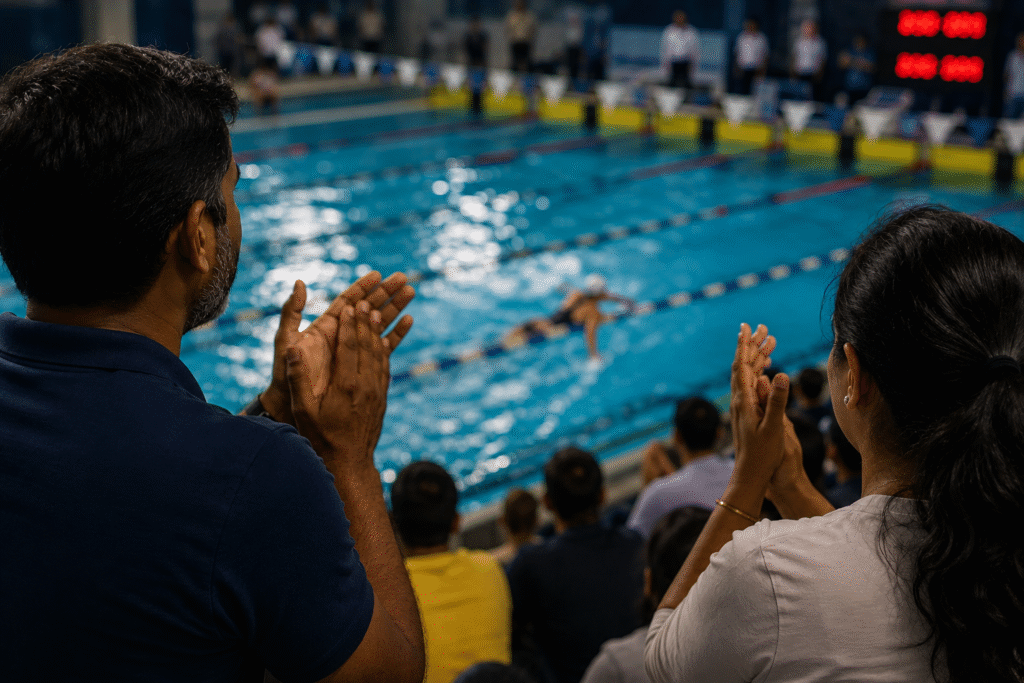
For many sports parents, the day their child plays their first competition feels like the beginning of a dream. Naturally, you want them to win, perform well, and enjoy the experience.
But after working with young athletes and their families for over two decades, we’ve seen that the first few competitions are about much more than medals—they shape how children think and feel about competition itself.
At MyMentalCoach, our sports psychologists often find that it’s not the result that leaves the biggest impact on a young athlete, but how the people around them respond to it. That’s why learning to think beyond winning is one of the greatest gifts you can give your child.
In this blog, you’ll discover simple yet powerful parent behaviours that help children enjoy competition, learn from every experience, and build the mindset needed for long-term success in sport.
Why Your Child’s First Competitions Build More Than Future Champions
For many parents, the first few competitions feel like an opportunity to measure their child’s talent. But as sports psychologists, we’ve found that these early events shape something far more important than results—they shape a child’s relationship with competition itself.
A young athlete isn’t just learning how to bat a sixer, swim faster, or score more goals; they’re learning what competition feels like.
Do they see it as something exciting or something to fear? Do they come off the field wanting to train harder, or worrying about disappointing their parents? These early experiences quietly influence whether children look forward to competing or begin to associate it with pressure and judgment.
Long before children become champions, they’re building habits that determine whether they’ll stay in sport long enough to reach their potential. Emotional safety after mistakes, consistent pre-match and post-match routines, reflecting on what they learnt instead of obsessing over the scoreboard, enjoying the challenge of competition, and developing patience with their progress are all built through hundreds of small interactions—not one motivational speech.
Parents influence these habits every weekend through their words, body language, and reactions. When children feel safe to make mistakes and keep learning, they’re more likely to stay in sport, keep improving, and eventually perform at their best.
That’s how future champions are truly built—not just through talent, but through the everyday environment that surrounds them.
Think Beyond Winning: 5 Behaviours That Shape a Young Athlete’s Future
1: Talk Less About Results, More About Experiences
The first question you ask after a competition often becomes the first thing your child believes matters. If every conversation starts with, “Did you win?” or “What position did you finish?” your child slowly learns that results are the most important part of competing.
Instead, ask questions like, “What was the most enjoyable part of today?”, “What did you learn about yourself?” or “What was the toughest moment in your match?” These questions encourage children to reflect on their experience rather than judge themselves by the scoreboard.
Over time, they become more self-aware, more willing to learn, and less afraid of setbacks because they know every competition is an opportunity to grow—not just to win.
2: Let Your Child Lead the Conversation
One of the biggest mistakes parents make is turning the journey home into an instant performance review. As soon as the match ends, children are often still processing their own emotions. Bombarding them with advice, analysing every mistake, or asking why they made certain decisions rarely helps at that moment.
Instead, let your child decide when they’re ready to talk. Sometimes they’ll want to discuss every moment of the match, and other times they’ll simply need some quiet time.
By listening first and speaking second, you teach your child that they don’t have to defend their performance—they can explore it. This builds trust and encourages honest conversations instead of fear of criticism.
3: Keep Your Match-Day Behaviour Predictable
Children pay as much attention to their parents as they do to the competition. If you’re overly excited after a win but visibly frustrated after a loss, they begin to associate your mood with their performance. They start playing not just for themselves, but to manage your emotions too.
One of the best things you can do is remain calm, encouraging, and emotionally consistent regardless of the result. Whether your child wins the tournament or loses in the first round, they should know exactly what they’ll receive from you—support, encouragement, and unconditional belief.
That emotional stability gives young athletes the confidence to compete freely without constantly worrying about your reaction.
4: Praise One Behaviour, Not Just the Entire Performance
Instead of saying, “You played brilliantly today,” be specific about what impressed you. You might say, “I liked how you kept fighting even after losing the first set,” or “I noticed you encouraged your teammate after they made a mistake.”
Praising specific behaviours helps children understand what they should repeat, while generic praise often leaves them unsure of what they actually did well.
Even after a difficult competition, there’s always something worth recognising—staying composed under pressure, following their routine, showing discipline, or bouncing back after an error. These are the behaviours that build long-term success, and they’re often far more valuable than the final result.
5: Leave the Match at the Venue
Not every moment of the day needs to revolve around the competition. When parents continue discussing missed chances, umpiring decisions, or technical mistakes throughout the evening, children never get the chance to stop thinking of the performance. Sport becomes something they’re constantly carrying instead of something they experience and recover from.
Once you’ve had one healthy conversation about the competition, allow the rest of the day to return to normal. Talk about school, friends, favourite meals, or weekend plans. This simple habit teaches young athletes that while sport is an important part of life, it isn’t their entire life.
That balance protects their mindset and helps them return to training refreshed rather than emotionally drained.
Thinking beyond winning also means recognising the subtle ways parents can add pressure without realising it. Read more in our blog, How Parent Pressure on Child in Sports Quietly Steals the Joy of the Game & One Simple Strategy to Bring It Back.

3 Changes Parents Can Make Before Every Competition
Change Your First Question
The question you ask just before your child steps onto the field, court, or track can have a bigger impact than you realise. Many parents, with the best intentions, ask, “Are you going to win?” or “How many medals do you think you’ll get?” While these questions seem encouraging, they immediately shift your child’s attention to a result they can’t completely control.
Instead, ask something that directs their mind towards the process, like, “Which is your favourite skill” or “Will you be having fun during your performance today?” These questions help children focus on executing their skills and interests rather than chasing an outcome.
Over time, this small change teaches young athletes to judge success by how well they prepared, competed, and learnt—not just by where they finished. That’s the mindset that supports consistent performance and a lifelong love for sport.
Change What You Notice
After every competition, challenge yourself to notice something beyond the scoreboard. Did your child stay calm after making a mistake? Did they continue giving their best effort even when they were behind? Did they make smarter decisions than they did in the last competition? Did they enjoy being out there despite the pressure? These are signs of genuine progress that often go unnoticed when parents focus only on scores, rankings, or medals.
The behaviours you consistently notice become the behaviours your child believes are important. When you recognise effort, emotional control, decision-making, and enjoyment, you’re encouraging qualities that support long-term development, not just one successful performance.
Change Your Expectations
Many parents expect every competition to show visible improvement, but athlete development rarely follows a straight line. One week your child may perform brilliantly, and the next they may struggle despite training just as hard.
Instead of expecting better results every time, look for better learning, improved emotional control, smarter decision-making, or greater willingness to take on challenges. These are often the first signs that real progress is happening, even before it appears on the scoreboard.
When parents learn to measure growth in this way, children feel less pressure to prove themselves every weekend and more confidence to keep learning. Ironically, it’s this long-term approach that often leads to better performances and more consistent results over time.
How MyMentalCoach Helps Parents Think Beyond Winning
Every competition is an opportunity for your child to build something far more valuable than a medal—a healthy mindset. As a sports parent, your reactions, conversations, and everyday behaviours shape how your child experiences competition.
When you think beyond winning, you help them develop resilience, enjoy the process, learn from setbacks, and stay motivated for the long journey ahead. These are the qualities that create not just successful athletes, but confident and emotionally strong individuals.
At MyMentalCoach, we help sports parents support their child’s mental game through practical sports psychology strategies and everyday habits.
Guided by Dr. Swaroop Savanur’s 20+ years of experience, we empower athletes to build a strong foundation for long-term success. To learn more, book a FREE 15-minute Call or WhatsApping +91 98237 91323.