

Have you ever spent an entire afternoon studying, only to realise that very little of what you read has actually stayed with you?
You want to finish your syllabus, improve your mock test scores and make every study session count, but some days your mind simply refuses to keep up. With the pressure of competitive entrance exams, taking a break can feel like falling behind, even when you are mentally exhausted.
But does studying for longer always mean preparing better? And how do you know when you need rest rather than more effort?
Dr Swaroop Savanur, Founder and Director of MyMentalCoach, brings a mental conditioning and peak performance perspective to this challenge.
Drawing on the understanding of a sports psychologist, this blog explores three signs that your mind may need a break, why rest is an important part of effective exam preparation, and how you can return to your studies with better concentration and a more balanced mindset.
Are You Studying More but Getting Less Done?
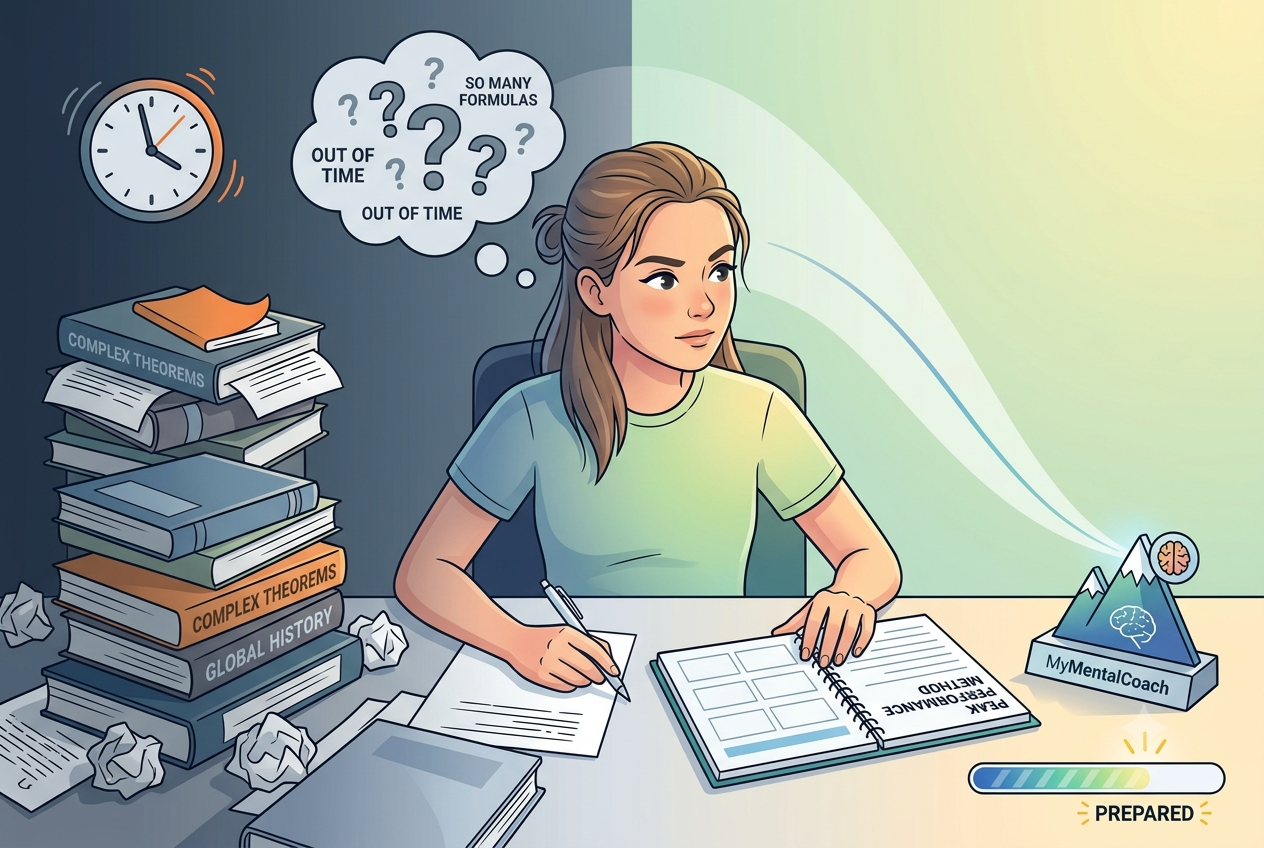
You sit at your study table with a clear target for the day. You have chapters to revise, mock test questions to analyse and topics you still need to complete before your entrance exam. You begin studying with the intention of making the most of your time, but soon find yourself reading the same paragraph repeatedly without understanding it.
Even a small distraction irritates you, your concentration keeps shifting and you start checking the clock more often than your notes. Yet, you continue sitting with your books because the exam is approaching and taking a break feels like losing valuable preparation time.
Many students experience this during exam preparation, especially when they are trying to balance an unfinished syllabus, regular mock tests and expectations about their performance. But spending more hours studying does not always mean you are learning more.
Sometimes, pushing yourself to continue when your mind is already exhausted can make your preparation less effective. The important thing is to recognise when you need to make an effort to stay consistent and when you genuinely need time to recover.
Knowing when to pause is also part of exam preparation, and in this blog, we explore three signs that your mind may be asking for a break and how to recognise the difference between temporary reluctance and mental exhaustion.
Why Do Students Feel Guilty About Taking a Break During Exam Preparation?
For many students, taking a break is not just about stepping away from their books. It can bring an uncomfortable feeling that they are falling behind, losing valuable time or not working hard enough.
This feeling often comes from the belief that every minute must contribute directly to exam preparation. When students think this way, even a short break can feel like an irresponsible choice rather than a necessary pause.
They may start calculating how much they could have studied in those fifteen minutes or feel uneasy seeing others continue with their revision. Social conversations can make this worse.
A friend mentioning that they have completed three chapters or studied for ten hours can make students question whether they are doing enough, even when they have been following their own study plan.
An unfinished syllabus adds another layer of pressure, making rest seem like something they can consider only after completing everything. However, there will almost always be another chapter to revise, another mock test to attempt or another topic to revisit.
Some students also associate discipline with maintaining an uninterrupted study routine, so they continue working even when their concentration and ability to absorb information have declined. Over time, this can turn studying into a constant attempt to meet expectations rather than a process of meaningful learning.
Discipline during exam preparation is not measured only by the number of hours you study; it also involves recognising when your effort is productive and when your mind needs time to recover. A planned break does not mean you are taking your preparation lightly.
It can help you return with better attention and maintain a more consistent approach over the long term.
3 Signs You Need a Break From Your Exam Preparation
1. You Keep Reading, But Struggle to Retain What You Study
You have been studying a chapter for almost an hour, yet you keep returning to the same paragraph because the information does not seem to stay with you. You may understand a concept while reading it, but struggle to explain it or recall the key points once you close your book.
This can be frustrating, especially when it is a topic you have studied before. You might start questioning your memory, intelligence or even the quality of your exam preparation. However, difficulty retaining information does not always mean you have not studied enough.
When your mind has been working for long periods without adequate recovery, mental fatigue can make it harder to concentrate, process new information and retrieve what you have already learnt.
As a result, you may spend more time on a familiar topic without making meaningful progress. If you repeatedly lose track of what you are reading, struggle to understand concepts you previously found easy or find it difficult to remain engaged despite making an effort, it may be a sign that you need some recovery time.
Sometimes, the best way to improve the quality of your exam preparation is to pause rather than force yourself through another hour of studying.
2. Small Study Setbacks Are Affecting You More Than Usual
You get a question wrong that you would normally solve, score lower than expected in a mock test or fail to complete a study target you had set for the day. Instead of treating it as an ordinary part of learning, you feel unusually frustrated or discouraged.
One incorrect answer may make you question your preparation, while an average mock test score may leave you worried about how you will perform in the actual entrance exam. When this happens repeatedly, even small academic setbacks can begin to feel much bigger than they really are.
This may happen when mental fatigue has been building up over several days of demanding exam preparation. When you are already mentally exhausted, you may find it harder to manage disappointment, look at mistakes objectively or regain confidence after an unsatisfactory study session.
Rather than identifying what went wrong and moving forward, you may spend too much time thinking about the mistake or worrying about your overall performance. Pay attention if you are becoming more irritated than usual, losing confidence after minor errors or finding it difficult to move on from a disappointing result.
Your ability to respond calmly to setbacks is also important during exam preparation, and sometimes taking a short break can help you regain perspective before returning to your studies.
3. You Sit Down to Study, But Keep Putting It Off
Your books are open, your notes are arranged and you have already decided what needs to be completed that day. Yet, instead of starting, you find yourself checking your phone, organising your desk again, looking for something to eat or postponing the task for another few minutes.
Even when you finally begin, staying focused feels like an effort. It is easy to interpret this as laziness or a lack of discipline, especially when you know how much syllabus is still left to cover. However, difficulty getting started is not always a motivation problem.
During demanding exam preparation, students can become so accustomed to following packed timetables and meeting daily targets that they leave very little room for mental recovery. Over time, even familiar study tasks can begin to feel overwhelming, making it difficult to bring the same attention and involvement to each session.
Notice whether you are repeatedly delaying your study sessions despite genuinely wanting to make progress, or whether you feel mentally drained even before you begin. If this continues across subjects and study sessions, rather than happening only when you have to study a particular topic, it may be worth stepping away briefly.
Giving yourself time to recharge can help you return to exam preparation with a clearer mind and a more willing approach to learning.
Does Taking a Break Mean You Are Falling Behind Other Students?
When you are preparing for a competitive entrance exam, it is easy to feel that everyone else is moving faster than you. A friend tells you they have completed three chapters, someone shares their mock test score, and another student mentions how many hours they studied that day.
Without realising it, you begin measuring your own preparation against their progress. Even when you are mentally tired, taking a break can make you feel as though you are giving others an advantage. But studying for longer does not automatically mean you are studying effectively.
Two students can spend the same number of hours with their books and make very different levels of progress, depending on how well they are able to concentrate, understand and retain what they study. Similarly, taking a break does not undo the concepts you have already learnt or the effort you have put into your exam preparation.
It simply gives your mind some time away from continuous academic demands so that you can return with better concentration and make more productive use of your study time. This does not mean ignoring your timetable whenever a subject feels difficult or using breaks to avoid unfinished work.
There is a difference between stepping away because you genuinely need recovery and repeatedly postponing preparation because you do not feel like studying. Your progress should be judged by how well you are understanding concepts, improving through practice and moving towards your learning targets, not just by the number of hours you spend at your desk.
Every student has a different pace, and comparing study hours cannot tell you how effectively someone is learning. A planned break, followed by a return to your schedule, can be a sensible part of consistent exam preparation, not a sign that you are falling behind.
Constantly comparing your progress with others can lead to overthinking and unnecessary self-doubt. Watch Dr Swaroop Savanur’s video on 5 Steps to Control Overthinking While Preparing for NEET/JEE to learn how to manage these thoughts.
How to Take a Break Without Losing Your Study Rhythm
A good break during exam preparation does not need to be long or carefully planned. What matters is giving your mind a genuine change of focus. Once you finish a study session, step away from your books, notes and mock test analysis instead of continuing to think about unfinished topics or mistakes.
Try not to spend the entire break scrolling through social media or checking how much other students have studied, as this can keep you mentally occupied with the same comparisons and pressure.
Instead, take a short walk, spend some time outdoors, talk to someone at home or do an activity you enjoy. Even a brief pause can help you feel more refreshed, particularly when you have been concentrating for a long time.
When you return, do not try to compensate for the break by extending your study hours or setting an unrealistic target. Start with one manageable task, such as revising a particular concept or solving a few questions, and allow yourself to settle back into the routine.
The purpose of a break is not to interrupt your exam preparation, but to help you return with better concentration and readiness to continue. You should not have to feel guilty for taking time to recover from the effort you are putting into your studies.
How MyMentalCoach Helps Students Build a Stronger Exam Performance Mindset
Preparing for a competitive entrance exam requires more than completing the syllabus, solving mock tests and revising regularly.
Students also need to recognise how their mind responds to long study hours, academic setbacks and the pressure of an upcoming examination. If you find yourself repeatedly reading without understanding, becoming unusually frustrated over small mistakes or struggling to begin a study session, do not dismiss these signs as a lack of discipline.
They may be an indication that you need to pause and pay attention to your mental readiness. Taking a break does not mean you are giving up on your exam preparation. It means understanding that consistent performance requires both effort and recovery.
When you allow yourself time to recharge, you give yourself a better opportunity to return with concentration, confidence and a more balanced approach to your studies.
At MyMentalCoach, we believe that students need to train their minds alongside their academic preparation. Founded by Dr Swaroop Savanur, Founder and Director of MyMentalCoach, our structured mental training approach focuses on developing essential performance skills such as concentration, confidence, motivation, consistency and composure.
Through mental conditioning and peak performance training, students learn to understand their performance patterns and strengthen the mental skills that support them throughout demanding exam preparation and examinations.
To understand how mental training can support your child’s preparation journey, book a free 15-minute Peak Performance Discovery Call with our team at +91 98237 91323.

