

What do you do when an athlete has the skill, the training and the experience, but still hesitates when it is time to use them?
You may see them looking towards the coach before making a decision, changing a shot they normally play with confidence, or second-guessing themselves after one mistake. Nothing about their ability has suddenly disappeared.
What has changed is their willingness to rely on it when the pressure rises. Helping an athlete trust their ability is not about repeatedly telling them, “You can do it.” It is about helping them experience, recognise and rely on their own preparation and decisions.
This is where coaches and sports psychologists can make a real difference by building mental skills into everyday training, rather than trying to fix confidence only when competition arrives.
At MyMentalCoach, we work with athletes to develop these practical mental habits alongside their physical and technical training. So, what can a coach actually do to help an athlete back themselves when it matters? Here are five practical ways to build that trust.
When the Skill Is There, But the Trust Is Missing
Every coach has seen an athlete who looks different in competition from the athlete they see every day in training.
The technique is familiar, the preparation is done, and the ability has not suddenly disappeared. Yet, when the moment arrives, the athlete takes an extra second, checks with the coach, changes a decision halfway through, or chooses the safer option instead of the one they have trained to execute.
What has changed is not necessarily their skill—it is their willingness to rely on it when the outcome matters.
Athletes trust their ability becomes especially important here because performance requires more than knowing what to do; it requires the freedom to commit to that decision without constantly asking, “What if this goes wrong?”
This is where a coach’s response can make a real difference. When an athlete is struggling to trust their ability, repeatedly correcting, reminding or reassuring them may provide temporary comfort but can also keep the coach at the centre of every decision.
The longer-term goal is different: help the athlete become comfortable making decisions, committing to their preparation and recovering when something does not work.
In high-performance sport, pressure cannot simply be removed; athletes need mental processes that allow them to perform through it.
The coach’s role is therefore not to convince the athlete that they will always get it right. It is to help them believe that even when they do not, they have the ability to respond, adjust and continue. That is when trust starts becoming part of performance rather than something the athlete waits to feel before they play.
Trust Their Ability Before They Need to Perform
Trust in sport is often misunderstood as the feeling of being completely confident before competition. But an athlete does not need to walk into a match thinking, “I know I will succeed.” They also do not need to believe, “I cannot make mistakes.”
Those expectations can actually make performance harder because sport is uncertain by nature.
An athlete can prepare well, feel nervous, face a stronger opponent, make an early mistake and still perform effectively.
To trust their ability means something more practical: “I have trained for this. I may not know exactly what will happen, but I can commit to what I know.” This is where self-trust differs from certainty. Certainty asks the athlete to know the outcome; self-trust allows them to handle the outcome.
For a coach, that distinction matters because the aim is not to create an athlete who feels confident every minute. It is to develop an athlete who can make a decision, commit to it and stay connected to their game even when confidence fluctuates.
That kind of trust is built long before the athlete walks onto the field, court, track or pitch. It develops through the small responsibilities given during training: allowing athletes to make decisions, letting them experience the result of those decisions, helping them reflect without immediately judging the outcome, and gradually teaching them to rely on their own preparation.
When every uncertainty is answered by the coach, the athlete may become good at following instructions but less comfortable trusting their own judgement.
Strong coaching creates a different relationship with the athlete—it gives guidance without taking away ownership. Over time, the athlete begins to understand, “My coach has prepared me, but I still have to play my game.”
That is a much more sustainable form of confidence, particularly for young athletes in competitive Indian sport, where selection pressure, expectations and performance results can easily become louder than the athlete’s own preparation.
Mental training helps create the space for athletes to recognise what they already know, commit to it and perform without waiting for perfect certainty.
5 Ways to Help an Athlete Trust Their Ability
1. Give Them One Cue, Not Five Instructions
When an athlete is already thinking too much, adding more instructions can make the mind even busier at the exact moment you want it to become clear.
Coaches often give multiple reminders with good intentions—technical correction, tactical advice, timing, body position and a warning about what happened last time—but the athlete may end up trying to process all of it instead of responding to the situation in front of them.
A simple performance cue gives the athlete something they can actually use while performing. “Watch the ball,” “Stay with the ball,” “First step,” or “Play the next one” is not about reducing coaching; it is about making coaching usable under pressure.
It also gives the athlete room to trust their ability rather than constantly searching for the next instruction from the coach. The athlete learns that they do not need running commentary from the sidelines to perform a skill they have already trained.
The coach remains an important source of guidance, but the athlete gets the mental space to see, decide and execute for themselves. That shift—from waiting for instructions to trusting trained responses—is one of the simplest ways a coach can strengthen self-trust during competition.
A coach’s response in these moments can shape how an athlete learns to handle mistakes. For a deeper look at how communication after an error can influence confidence and recovery, read MyMentalCoach’s “Coach’s Response After Mistakes: The Hidden Moment That Defines Athletes.”
2. Let Training Become the Evidence
An athlete does not always need another person to tell them, “You are good enough.” Sometimes they need to notice the evidence themselves.
Coaches can make this part of training by helping athletes recognise specific moments of progress instead of allowing every session to be judged only by the final result.
A well-executed skill under pressure, a better decision, a quicker recovery after an error, or the courage to attempt something they previously avoided can all become evidence that their ability is developing.
Questions such as “What did you execute well today?”, “Where did you back yourself?” or “What feels easier now than it did a few weeks ago?” shift the athlete from seeking reassurance to observing their own growth.
This matters because trust in their ability cannot be built entirely through praise from a coach; eventually, the athlete has to have their own reasons for believing in their preparation.
When athletes learn to recognise progress for themselves, one poor session has less power to erase everything that came before it. The coach is no longer trying to convince the athlete that they are capable—the training itself is giving the athlete something real to believe in.
3. Stop Rescuing Every Decision
A coach’s instinct to help is natural, especially when an athlete looks uncertain, but answering every decision for them can quietly teach the athlete that the right choice must come from the sideline.
The athlete may become technically well coached but mentally dependent—looking towards the coach after a mistake, waiting for confirmation before committing, or losing confidence when the coach is not immediately available.
Instead of solving every situation, create moments where the athlete has to read the situation and own the decision.
When an athlete asks, “Sir, should I play this shot?” or “Coach, what should I do now?”, a simple “What do you see?” gives the responsibility back to them. Once they respond, “Trust your decision” reinforces that their judgement has a place in the game.
This does not mean leaving athletes without guidance; it means knowing when guidance has done its job.
The long-term goal is for an athlete to carry the coach’s learning onto the field without needing the coach’s voice in their head for every action. That is how coaches help athletes trust their ability—not by making every decision easier, but by giving them enough opportunities to become comfortable making decisions themselves.
4. Build a Reset After Mistakes
Coaches know that mistakes are part of competition; the bigger concern is what the athlete carries from one moment into the next. A missed shot, dropped catch, poor delivery or wrong decision should remain one event, not become the emotional background for everything that follows.
When an athlete keeps replaying the previous mistake, the next action gets performed while the mind is still somewhere else. That is why a reset needs to be practised in training, not introduced for the first time after a bad performance.
The athlete can acknowledge what happened without arguing with it, deliberately leave that moment behind, and bring attention back to one clear action they can control now. Sometimes that can be as simple as saying, “Done. Next ball.”
The power is not in the words themselves but in the habit they create. The coach is teaching the athlete that a mistake does not require a loss of trust, a change in identity or a complete rethink of their game.
They can make an error, settle themselves and continue playing. When athletes experience this repeatedly, they begin to trust their ability not because they expect everything to go perfectly, but because they know they can handle what happens next
5. Give Them Opportunities to Own the Win
When an athlete performs well, the easiest response for a coach is to explain exactly what went right: “Your footwork was better,” “You stayed patient,” “You followed the plan.”
That feedback has value, but if the coach always provides the explanation, the athlete can become a passenger in their own success. Give them the opportunity to identify what they did, what they trusted and what they want to carry into the next performance.
Questions like “What did you do well today?”, “Where did you trust yourself?” and “What should you repeat next time?” make the athlete look inward for evidence rather than outward for approval.
The language begins to change from “Coach said I played well” to “I know what I did well today.” That difference is important. Independent confidence grows when athletes can recognise their own decisions, preparation and responses, including the things they did well when the match became difficult.
For coaches, this also creates a more mature athlete—someone who can learn from a performance without needing the coach to interpret every part of it.
When an athlete can identify the behaviours behind their success, they have something concrete to return to on a difficult day. That is how they begin to trust their ability from within, rather than depending on someone else to remind them that they are capable.
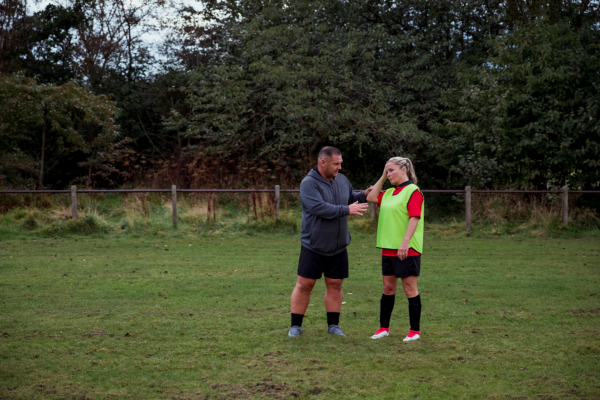
What to Say When an Athlete Says, “I Don’t Trust Myself”
Sometimes an athlete will tell you very directly, “I don’t trust myself anymore.” A coach can hear that as a confidence issue and immediately start reminding the athlete of their past performances, strengths or achievements.
But the athlete may not need a list of everything they have done well. In that moment, they may need someone who can listen without turning the conversation into a motivational speech.
Instead of rushing to correct the feeling, get curious about what the athlete means by it. Is it the decision they are struggling with? The fear of repeating a recent mistake? The pressure of disappointing the team? Or are they simply becoming uncomfortable with making mistakes in front of others?
A calm question such as “What exactly are you not trusting right now?” can reveal far more than “You need to be confident.” It helps the coach understand whether the athlete needs technical clarity, a change in expectations, emotional support or simply some space to regain composure.
Once you understand what is underneath the statement, your words can become much more precise. If the athlete is afraid of making the wrong decision, “You are allowed to make the decision without knowing how it will turn out” can take away the demand for certainty.
If they are stuck on a recent performance, “Let’s not use one performance to judge your whole game” helps put the result back in perspective. And if they are waiting for the coach to tell them what to do, “I want to hear what you think first” quietly returns ownership to them.
These conversations are especially valuable because the coach is teaching something that cannot be taught through technical instruction alone: how to stay engaged with the game when the mind becomes uncertain.
Helping athletes trust their ability does not always require a powerful speech; sometimes it requires the coach to ask the right question, tolerate a little silence and give the athlete enough room to find their own answer.
Trust Is Built in Training, Not Demanded on Match Day
A coach cannot wait until the final over, deciding point, selection trial or high-pressure moment and suddenly ask an athlete to “trust yourself.”
By then, the athlete will rely on the habits they have developed throughout training. If every uncertain moment has been met with another instruction, every mistake with an immediate correction, and every decision with an answer from the coach, it becomes difficult for the athlete to suddenly take complete ownership when competition begins.
Self-trust needs to be part of everyday practice. Athletes need room to make decisions, deal with imperfect outcomes, understand what went wrong without being defined by it, and return to the task with a clear mind.
This is where athletes having to trust their ability becomes more than something a coach says before a match. It becomes something the athlete has repeatedly experienced through their own actions.
The role of the coach is not to make an athlete feel confident every day. It is to help them develop the mental habits that allow them to perform even on days when confidence is not at its highest.
An athlete who has practiced making decisions, recovering from mistakes, handling uncertainty and staying connected to the next action has something much stronger than temporary motivation.
They have evidence that they can manage difficult moments, that experience changes the athlete’s relationship with pressure. They no longer need everything to feel right before they act; they can act, adjust and continue even when doubt is present.
That is when athletes begin to genuinely trust their ability, not because someone has promised them that they will succeed, but because training has taught them that they can handle whatever the performance demands.
How MyMentalCoach Can Help Rebuild an Athlete’s Self-Trust
An athlete does not need a coach who constantly reminds them that they are capable. They need a coach who helps them experience that capability for themselves.
When athletes are given space to make decisions, recognise their progress, recover from mistakes and take ownership of their performances, confidence becomes less dependent on the result of one match.
They begin to understand that a difficult day does not mean they have lost their ability. They can step back, reconnect with what they know and trust their ability when the situation demands it.
For coaches, that is one of the most valuable things you can build in an athlete—not just better performance, but a player who can eventually carry their own confidence into the game.
At MyMentalCoach, we work with athletes, coaches and sports academies to develop the mental side of performance through structured mental training.
If you have an athlete who is struggling to trust their ability, repeatedly second-guessing themselves or finding it difficult to perform despite having the required skills, you can speak with our team and understand what may help.
Book a free call on +91 9112220823 to discuss the athlete’s situation and explore the right mental training approach for them.

