
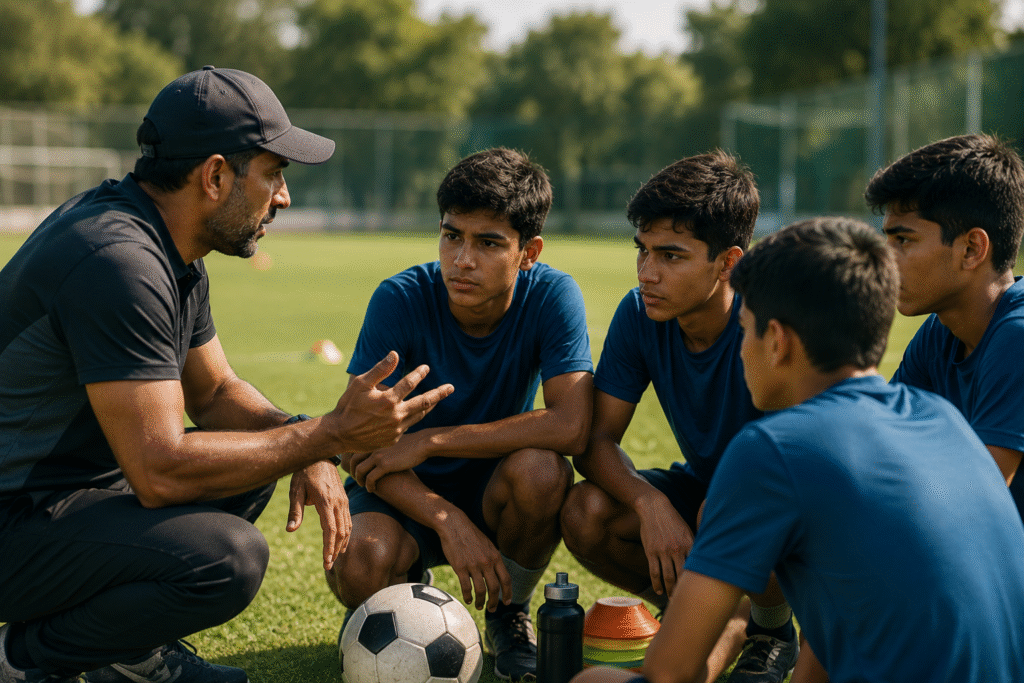
A coach can spend months refining an athlete’s technique, fitness and tactics, yet sometimes one mistake, one difficult match or one moment of pressure can change how that athlete performs.
The skill hasn’t suddenly disappeared—the athlete’s attention, emotional control and decision-making may simply have been affected by what happened. Most coaches have seen an athlete look confident during training but become hesitant after an error, lose focus when the score turns against them, or start questioning their decisions when competition pressure rises. That is why mental strength deserves a place alongside physical and technical development.
A mentally strong athlete isn’t someone who never feels nervous, frustrated or disappointed; they are someone who can recognise those emotions, regain focus, learn from setbacks and continue taking useful action.
As sports psychologists, we believe coaches don’t need to become psychologists to develop these abilities—the everyday training environment, feedback, challenges, mistakes and opportunities for responsibility can all shape how an athlete responds under pressure.
In this blog, we look at practical ways coaches can build mentally strong athletes through regular training and how MyMentalCoach can support coaches and academies in making mental performance a consistent part of athlete development.
Why Is Mental Strength Important in Athlete Development?
A coach may have seen this many times: an athlete looks excellent during a routine drill, but one mistake in a match changes everything. A cricketer gets dismissed early and becomes hesitant at the crease; a tennis player loses a few points and starts rushing; a footballer makes one poor pass and stops asking for the ball.
The technical skill hasn’t disappeared in those few minutes—the athlete’s attention, emotional control and decision-making have been affected by what just happened. This is why mental strength matters in athlete development.
A mentally strong athlete can still feel nervous, frustrated or disappointed; the difference is that they can recognise what is happening, regain their focus and continue with the next useful action instead of allowing one moment to control the rest of their performance.
Mental skills also shouldn’t be treated as something to introduce only before a major tournament or when an athlete’s confidence has already dropped. Just as coaches repeatedly train footwork, technique, fitness and tactics, athletes need opportunities to practise focus, emotional regulation, confidence, resilience and responding to pressure.
For example, a coach can deliberately create a difficult training situation and then observe how an athlete responds after an error—not simply whether they complete the drill successfully. That response is part of athlete development too.
When mental skills are built into regular training, athletes gradually become better equipped to use their technical and tactical abilities when the environment becomes unpredictable. That is a much more practical way to build mentally strong athletes than relying on a motivational speech when competition day arrives.
4 Ways to Build Mentally Strong Athletes
1. Make Mistakes a Part of Learning, Not a Threat
Athletes who become afraid of making mistakes often start playing safely rather than playing well—they hesitate to take responsibility, avoid difficult decisions and become overly cautious because their attention is on not getting it wrong. A coach can change this by treating mistakes as information rather than as a judgement of the athlete’s ability.
This doesn’t mean ignoring errors or lowering standards; it means helping the athlete understand what happened, what can be learned from it and what needs to happen next. When a mistake is followed by a clear correction and another opportunity to try, the athlete learns that an error is something they can respond to rather than something they need to fear.
Over a period of time, this creates athletes who are more willing to take responsibility, adapt their decisions and recover quickly—an important foundation for coaches who want to build mentally strong athletes.
Coaches who want to build mentally strong athletes should also pay attention to what happens immediately after a mistake. For a deeper look at how a coach’s response can influence an athlete’s ability to recover, learn and move forward, read “Coach’s Response After Mistakes: The Hidden Moment That Defines Athletes.”
2. Teach Athletes How to Refocus Under Pressure
Telling an athlete to “stay positive” after a mistake is rarely enough when their mind is still stuck on what just happened. Coaches can help athletes develop a more practical way of bringing their attention back to the present.
The athlete first needs to recognise when their focus has shifted towards the mistake, the opponent, the score or worry about what might happen next.
Once they notice this, they can deliberately reset their attention and identify what needs to be done next. This should become part of regular training rather than something introduced only before an important competition.
Repeatedly practising how to regain concentration after a difficult moment helps athletes make clearer decisions, stay engaged with the task and respond more effectively when pressure rises. Over time, this becomes an important part of how coaches build mentally strong athletes.
3. Build Confidence Through Evidence and Controllable Goals
Confidence becomes much more stable when athletes have evidence that they can handle difficult situations, rather than depending entirely on winning, selection or praise from the coach.
Coaches can support this by setting small, measurable performance goals that the athlete can actually control, such as recovering quickly after an error, communicating consistently, staying focused during a difficult drill or following a pre-performance routine. These goals give athletes something meaningful to work on even when the final result is outside their control.
As athletes begin recognising these improvements, they develop a stronger sense of capability and start trusting their own ability to respond when things become difficult.
This is also where coaches can build mentally strong athletes—not by simply giving them more motivation, but by helping them repeatedly experience and recognise, “I can handle this.”, that evidence creates a more reliable form of confidence that can stay with the athlete even when the result doesn’t go their way.
4. Practise Pressure Before Competition
Athletes shouldn’t experience meaningful pressure for the first time in a final, selection trial or important match. Coaches can gradually introduce controlled challenges during regular training through timed drills, score-based situations, unfamiliar tasks or situations where the athlete has to perform again after making an error.
The purpose isn’t to make every session stressful; it is to give athletes a safe opportunity to experience pressure and learn how their attention, emotions and decision-making respond to it.
After the challenge, the useful conversation is not only about whether they succeeded, but also about how they responded when things became difficult and what they could do differently next time.
When this process is repeated, pressure becomes a situation the athlete has some experience navigating rather than something completely unfamiliar. This is another practical way coaches can build mentally strong athletes who are better prepared to stay composed and perform when competition demands more from them.
What If an Athlete Continues to Struggle?
When an athlete continues to struggle, the first response shouldn’t automatically be to label them as lazy, weak or lacking discipline. A persistent change in confidence, motivation, concentration, behaviour or enjoyment can have many possible reasons, and simply increasing pressure may not address what is actually happening.
Coaches can first look for patterns: Is the difficulty limited to competition, or is it also appearing during regular training? Has the athlete’s behaviour or engagement changed over time? Is the struggle affecting their willingness to participate or ability to respond to coaching?
Taking time to understand these changes allows the coach to respond to the athlete’s actual needs rather than making assumptions about their attitude.
There also comes a point when a coach’s role is to recognise that additional support may be useful.
If difficulties persist or begin to significantly affect the athlete’s training, performance or overall functioning, involving a parent, sports psychologist or another appropriate professional can provide a broader perspective and the right kind of support.
Seeking mental support does not mean the coach has failed or that the athlete is weak. In fact, recognising when an athlete needs help beyond technical coaching is an important part of responsible athlete development.
Coaches who understand this are better placed to build mentally strong athletes while also creating an environment where athletes feel supported rather than judged.
Mental Training Can Happen Inside Regular Coaching
Mental skills don’t have to be taught as a separate lesson with a worksheet, a presentation or a long conversation about mindset. The training environment itself can teach athletes how to think and respond.
A coach decides how much time an athlete gets to solve a problem independently, whether they are allowed to make decisions instead of being given every answer, how challenges increase as they improve, and how much responsibility they take for their own preparation. These choices gradually teach athletes to think for themselves, tolerate uncertainty and stay engaged when things aren’t going perfectly.
In that sense, good coaching is not only about transferring technique—it is also about creating situations where athletes learn how to handle the demands that come with using that technique.
This also changes the way coaches look at a training session. Instead of asking only, “Did the athlete complete the drill?” A coach can also notice how they approached the task—whether they stayed engaged when it became difficult, adapted when something wasn’t working, took responsibility for their decisions or remained open to feedback.
Those observations can then shape the next training session. Over time, athletes become more independent in managing their preparation and performance rather than relying on the coach to constantly direct them.
That is a deeper form of development, because the athlete gradually learns to carry these skills into competition even when the coach cannot be beside them.
How MyMentalCoach Helps Coaches Build Mentally Strong Athletes
Mentally strong athletes aren’t created by one motivational speech before a competition. They are developed through hundreds of small moments in training—when they make a mistake and try again, lose focus and bring their attention back, face pressure and learn to manage it, or struggle with a skill and stay engaged instead of giving up.
When coaches consistently create these opportunities, mental strength becomes part of the athlete’s development rather than something they are expected to suddenly find on competition day. Coaches can build mentally strong athletes by making mental skills a consistent part of everyday training—not something reserved only for competition or difficult phases.
The aim is not to create athletes who never feel nervous, frustrated or disappointed, but athletes who know how to respond when those feelings appear and continue to perform with greater awareness and confidence.
MyMentalCoach works with athletes, coaches and academies to make mental training a regular part of performance development.
Through work around confidence, concentration, emotional regulation, resilience, pressure management and performance routines, MMC helps athletes strengthen the mental skills that complement their physical, technical and tactical training.
MyMentalCoach brings practical mental-performance training into the athlete’s development journey. Coaches and academies can connect us for a FREE 15-minute call at +91 98237 77444 to understand how mental training can support their athletes.

