
Have you ever felt proud of your child’s progress until you heard about another young athlete winning a tournament, earning selection or performing better? Suddenly, the achievements that once made you happy may seem less significant, and you begin wondering whether your child is doing enough.
As a sports parent, wanting your child to succeed is natural, but comparing their progress with others can make it difficult to recognise their individual strengths and development.
Learning to stop comparing is not about lowering your expectations; it is about understanding that every athlete develops at a different pace and needs different kinds of support along the way.
Dr Swaroop Savanur, Founder and Director of MyMentalCoach, brings a mental conditioning, peak performance and sports psychology perspective to this challenge. At MyMentalCoach, we recognise the important role parents play in a young athlete’s sporting journey.
This blog explores four practical ways to help you move beyond comparison, appreciate your child’s progress and support their development without making another athlete’s success the measure of their own.
Your Child Is Improving, So Why Do You Keep Looking at Other Athletes?
Your child has been attending academy sessions, putting in hours of practice and competing regularly. You have seen their progress, and you know how much effort they are putting in.
Then, you hear that another child of the same age has won a tournament, earned a place in a selected team or started performing exceptionally well. Suddenly, you begin to question whether your child is progressing fast enough.
You wonder if they need more practice, better coaching or something extra that you might be missing. These thoughts often come from a genuine concern for your child’s future in sport. You want them to make the most of their ability, receive the right opportunities and succeed in something they have worked hard for.
But when another athlete’s achievements repeatedly become the standard against which you judge your child, it becomes difficult to recognise the progress your own child is making.
Learning to stop comparing your child with other athletes does not mean ignoring competition or becoming less ambitious about their future. It means understanding that every young athlete develops differently and that someone else’s current success does not tell you everything about your child’s potential.
For sports parents, the real challenge is to recognise when comparison is helping them understand the competitive environment and when it is making them overlook their own child’s needs, efforts and development.
Knowing how to stop comparing can help you shift your attention from how far ahead another athlete appears to be towards what your child needs to improve, learn and progress in their own sporting journey.
Why Do Sports Parents Compare Their Children With Other Athletes?
For many sports parents, comparison begins with a simple question: Is my child progressing as they should? When you see another young athlete winning tournaments, improving quickly or receiving selection opportunities, it can create a fear that your child might be falling behind.
You may have invested considerable time, money and effort in their sporting journey, from arranging training sessions and travelling for competitions to managing school commitments around practice.
Naturally, you want to see that effort lead somewhere. When results take longer than expected, another child’s achievements can start to feel like a measure of what your own child should have achieved by now.
Sometimes, the comparison also comes from not knowing what progress should look like at a particular age. If another 13 year old gets selected for a district level team while your child does not, it is easy to question whether your child is training enough, developing the right skills or receiving the right guidance.
But selection alone cannot tell you the complete story of either athlete. Their training history, current abilities, opportunities, physical development and individual needs may be very different. Without understanding these differences, parents can end up judging their child against a standard that may not reflect where they are in their development.
The intention behind these comparisons is often to protect a child’s future and help them succeed, but constantly measuring their progress against someone else’s can make it harder to recognise what they genuinely need.
The issue is not that you notice another athlete’s success. It is when that success becomes the measure of whether your own child is doing well enough. Understanding this difference is the first step towards supporting your child’s sporting development with greater clarity and confidence.
4 Ways to Stop Comparing Your Child With Other Athletes
1. Measure Your Child’s Progress Against Their Own Starting Point
Your child may not be winning tournaments yet, but that does not mean they are standing still. Perhaps they are making better decisions during matches, recovering more quickly after mistakes or showing greater consistency in training.
These improvements matter because sporting development is not measured by results alone. To stop comparing your child with other athletes, pay attention to what has changed in their performance over the past few months.
Instead of asking why a teammate is winning more matches, recognise what your child is doing better than before and what they need to improve next. When you stop comparing progress with someone else’s results, you can make more informed decisions about your child’s development.
2. Understand That Every Child Reaches Peak Performance at a Different Time
One child may excel in sport at 12, while another may make significant progress at 15 or later. Peak performance does not follow the same timeline for every child. Genetics, physical maturation, coaching, training opportunities, family support, surroundings and individual readiness can all influence how an athlete develops.
Even two children of the same age training at the same academy may differ in physical maturity, match experience, confidence and ability to handle competition. Their current results, therefore, cannot tell you who will ultimately reach a higher level.
Rather than using another athlete’s achievements as a deadline for your child, focus on understanding their present abilities, identifying areas for improvement and providing the support they need to progress.
When you stop comparing children at different stages of development, you give yourself a clearer perspective on your own child’s sporting journey.
3. Separate Your Child’s Sporting Journey From Your Expectations
As a parent, you naturally want your child’s hard work to lead to results. After months of training, you may expect a tournament win, a team selection or an improvement in ranking. But when these expectations are shaped by what other athletes have achieved, your child’s own progress can easily get overlooked.
Maybe your child loses in the first round but makes better decisions and handles difficult moments more effectively than in the previous tournament. If the conversation focuses only on the loss, these improvements may go unrecognised.
Take a moment to ask yourself whether you are concerned about your child’s development or worried because another athlete is moving ahead. Would you still appreciate your child’s progress if you had not heard about someone else’s achievement?
To stop comparing your child’s journey with another athlete’s, set expectations around their current abilities, individual goals and areas for improvement. This does not mean expecting less from your child.
It means helping them work towards their potential without making someone else’s achievements the standard they must meet. When you stop comparing their progress with your expectations of where they should be, you can better recognise what they need from you to keep developing.
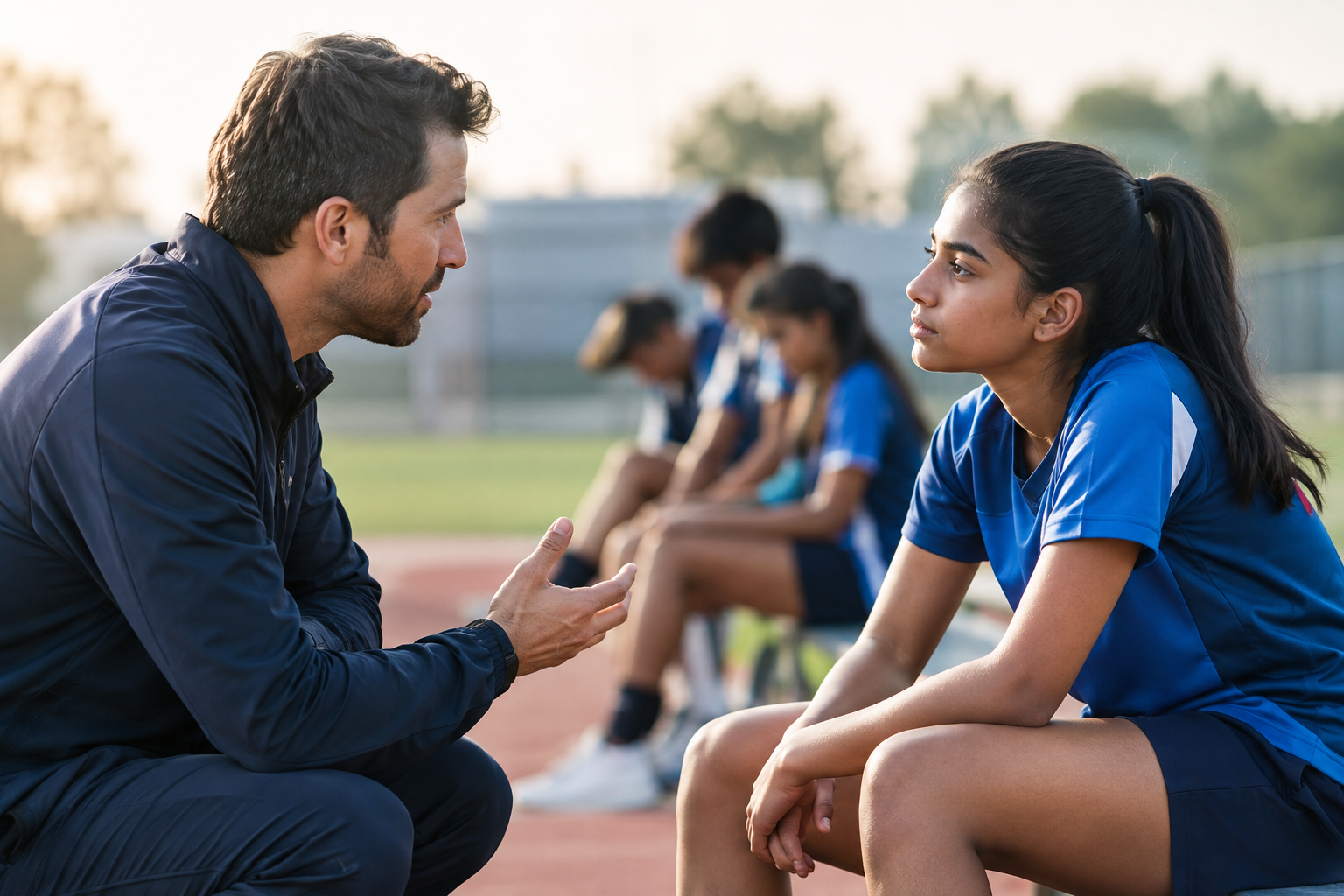
4. Talk About Other Athletes but not their age Without Making Your Child Feel Inferior
The way you talk about successful athletes can influence how your child views their own abilities. Your child might admire a cricketer, badminton player or footballer and dream of reaching a similar level.
You can use that admiration to encourage learning, but the conversation changes when every achievement becomes a reminder of what your child has not yet accomplished.
Telling them to play like their favourite athlete may seem motivating, but they may not understand the years of training, setbacks and development behind that player’s success. Instead, talk about what they admire in that athlete’s game and what they could learn from it.
You can also recognise another player’s achievement without turning it into a comparison with your child. Rather than asking why a teammate performs better, ask what your child would like to improve in their own game.
To stop comparing does not mean avoiding conversations about talented athletes or shielding your child from competition. It means helping them see other players as sources of learning and inspiration, not as proof that they are falling behind.
When parents approach these conversations thoughtfully, children can appreciate someone else’s success while continuing to build confidence in their own abilities and sporting journey.
Recognising your child’s progress also means understanding how to support them without taking over their sporting journey. Read our blog on how to support your athlete without taking over for practical guidance on finding that balance.
How MyMentalCoach Helps Sports Parents Support Their Child’s Progress
Every child has their own sporting journey, and their progress cannot be judged by how quickly another athlete achieves success.
When you recognise your child’s individual needs, appreciate their improvements and focus on what they can work towards next, you create an environment where they can develop with greater confidence.
Learning to stop comparing is not about ignoring competition or lowering your expectations. It is about understanding that meaningful progress looks different for every athlete and giving your child the time and support they need to grow.
At MyMentalCoach, founded by Dr Swaroop Savanur, Founder and Director, we believe that mental training is an important part of an athlete’s development.
Through structured mental conditioning and peak performance training, young athletes can work on skills such as confidence, motivation, consistency and performance-related thinking. We also help sports parents understand how their approach can influence their child’s sporting experience.
If you want to understand how mental training can support your child’s development, Book a Free 15-minute Call by calling or WhatsApping +91 98237 91323.