
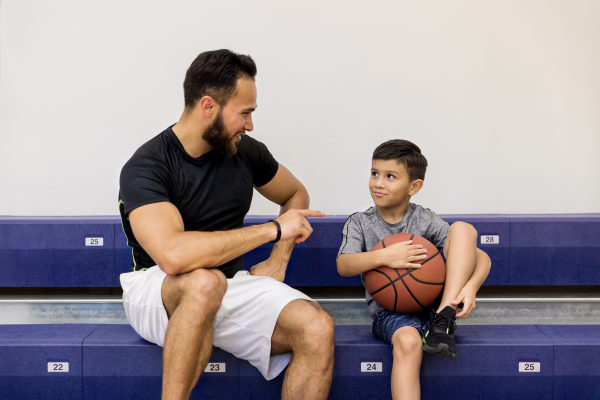
What if supporting your child more does not always mean helping them more? For a sports parent, that can be surprisingly difficult to accept. You watch every match, remember the mistakes they made, notice when their confidence drops and naturally want to step in before a small problem becomes a bigger one.
You want to say the right thing, protect them from unnecessary pressure and help them make better choices. But sport is also where your child needs to learn how to deal with things that you cannot always fix for them.
Through our work at MyMentalCoach, we have seen how the right kind of parental support can help an athlete grow in confidence and ownership, while too much involvement can sometimes make them more dependent on the very support that was meant to help them.
Learning how to support your athlete is not about standing further away from their journey. It is about knowing when your involvement helps them move forward and when stepping back gives them the chance to do it themselves.
Your Child’s Match Is Not Your Match
Your child walks out after a difficult match, and before they have even had a chance to settle, the questions begin. “What happened?” “Why did you make that mistake?” “Why didn’t you do what you practised?”
The intention behind these questions is usually love. Parents care, they have watched the training, travelled for competitions, invested time and money, and often feel the disappointment almost as strongly as the athlete.
But there is an important difference between being emotionally invested in your child’s sport and taking responsibility for their performance. Your child has just experienced the match from inside the game. They may still be processing a mistake, a decision, a missed opportunity or simply the emotions of competing.
When we immediately analyse everything for them, we can unintentionally take away the space they need to understand their own experience. Sometimes, to support your athlete, the most useful first response is not another question or another solution.
It is simply being there and allowing them a moment to come back to themselves.
This becomes especially important as a young athlete grows. Sport is not only teaching them how to perform a skill. It is also teaching them how to deal with disappointment, make decisions, respond to mistakes, manage pressure and understand what they need to improve.
These are experiences they eventually have to handle on their own. A parent cannot always be beside them when they compete, and cannot always tell them what the right response is. What a parent can provide is the confidence that they do not have to be perfect to be supported.
You can care about their progress without analysing every performance. You can ask what they felt about the match instead of immediately telling them what you saw.
You can listen without feeling that you have failed as a parent because you did not provide an answer. Your child’s match belongs to them. Your role is not to take it over, but to create the kind of support that helps them learn from it.
The Best Sports Parents Don’t Have All the Answers
Sports parenting can quietly become a test that parents set for themselves. Am I saying the right thing? Should I be pushing more? Am I putting too much pressure on my child? Should I speak to the coach? Is my child practising enough? Why is another athlete progressing faster? What should I say after that performance?
When your child cares deeply about their sport, it is natural to feel that you should know what to do at every stage. But your child’s sporting journey will bring situations where there is no immediate answer.
A disappointing performance may not need an explanation that same evening. A selection decision may not make sense straight away. A period of low confidence may take time to understand.
Even a child who has been progressing well can suddenly struggle, and that does not always mean something needs to be fixed. Parents sometimes put themselves under pressure to have the right response every time, when what the athlete often needs is a parent who is calm enough to stay with them while they work things out.
The strongest way to support your athletes is not to become the person who has an answer for every difficulty. It is to become someone they can turn to while they find their own answers.
There will be moments when your child needs you to listen without immediately giving advice, moments when they need encouragement, and moments when they need you to step back and allow them to take responsibility for what comes next.
Knowing which one is needed is far more valuable than having something to say every time. As athletes grow, they need opportunities to understand their own performance, make decisions, handle disappointment and gradually trust themselves.
Your support should give them that space, not make them feel that every problem in their sporting journey has to be solved by someone else. You do not have to know exactly what your child needs every time.
Sometimes being a good sports parent simply means being present enough to listen, patient enough not to rush, and trusting enough to let your athlete grow.
5 Ways to Support Your Athlete Without Taking Over
1. Listen Before You Give Your Answer
Parents often feel they need to do something when their child is upset. The moment an athlete comes home disappointed, frustrated or quiet after a competition, the parent’s instinct can be to ask questions, explain what went wrong or offer a solution.
But before you decide what your child needs, give them a chance to tell you. They may not be looking for an answer at all. They may simply need to say what happened, make sense of what they felt and know that you are listening without judging the performance.
This is especially important after a difficult competition, when the athlete may already be replaying the match in their own mind. If the first conversation becomes an analysis of mistakes, they may start feeling that they have to defend their performance instead of understanding it.
To support your athletes well, you do not have to turn every difficult moment into a lesson. Sometimes the most valuable thing you can give your child is your full attention and the feeling that they can talk to you without immediately being corrected, questioned or fixed.
Once they feel heard, they are often in a much better place to think about what happened and decide what they want to do next.
2. Let Your Athlete Struggle Without Rushing to Fix Everything
The instinct to protect your child from struggle is natural, especially when you can see that they are frustrated or losing confidence. But supporting an athlete and solving everything for them are two different things.
When a parent immediately steps in whenever something becomes difficult, the athlete gets fewer chances to discover that they can handle difficult situations on their own. They may start looking to the parent for the answer every time something goes wrong, instead of learning to pause, think and decide what they want to do next.
This does not mean leaving your child alone when they are struggling. It means changing the message from “I’ll handle this for you” to “I’m here if you need me.” That small difference can have a big impact on how an athlete develops confidence and ownership.
When you support your athletes without taking every difficulty away from them, you allow them to experience something very important in sport: the feeling of finding their own way through a difficult moment.
Some struggles are uncomfortable, but they are not necessarily problems that need to be removed. Sometimes they are exactly the experiences through which an athlete learns, grows and becomes more capable.
3. Don’t Let Their Performance Decide How You Feel About Their Sport
Your child notices what happens after a competition, even when you do not say much. They notice when everyone is excited after a win, when the car ride becomes unusually quiet after a loss, or when the first conversation at home is about what went wrong.
As a parent, you may simply be reacting because you care deeply about their sport and want them to do well, but the athlete can slowly start connecting their performance with your mood.
They may begin to feel that when they win, they make everyone happy, and when they lose, they have brought disappointment home with them. That can make every competition feel bigger than it already is.
A young athlete needs to know that a poor performance can be discussed, learned from and improved, but it does not change how their parents see them. You can be concerned about their progress without making the result the centre of your relationship.
To support your athletes, give them the security of knowing that they can come home after a great match, an ordinary match or a really difficult one and still feel the same warmth from you.
That sense of security matters because when children know their relationship with their parents is not dependent on performance, they have more freedom to be honest about what they are struggling with, take responsibility for their development and learn from their sporting experiences instead of becoming afraid of disappointing the people they love.
This pressure does not always come from something a parent says directly. Sometimes it develops through repeated reactions to performances, expectations around results or the feeling that every competition has to prove something. We explore this in more detail in our article, “How Parent Pressure on Child in Sports Quietly Steals the Joy of the Game,” where we look at how well intentioned parental involvement can gradually affect an athlete’s enjoyment of sport.
4. Let the Coach Coach and Let Yourself Be the Parent
One of the easiest ways for a parent to become too involved in an athlete’s sport is to start analysing the game as if they are part of the coaching staff. It often begins innocently.
You notice something during the match, have an opinion about a decision, and want to share it while it is still fresh. But when an athlete hears coaching instructions during training, tactical feedback from the coach after competition and another analysis from a parent on the way home, the game can start feeling like there is always someone evaluating what they did.
The athlete needs to know whose sporting instructions they are responsible for following. If the coach has asked them to work on something, let that process happen on the training ground rather than competing with it from the passenger seat.
If you genuinely have a concern about the coaching, discuss it with the coach separately rather than making the athlete carry that disagreement.
And if your child has had a poor match, resist the urge to give them a second post match review before they have even had time to process the first one.
To support your athletes, sometimes the most valuable decision is to stay in your own lane. Be the person who knows how their day was, how they are feeling, what else is happening in their life and whether they are enjoying the journey.
The coach can help them become better at the sport. You can help make sure they do not lose themselves in it.
5. Give Your Athlete Questions Instead of Always Giving Answers
As parents, we often answer questions our child has not even asked. We watch a match and quickly form our own explanation for what went wrong, then feel that sharing it will help the athlete improve.
But if every difficult moment is followed by a parent explaining what happened, the athlete gets less opportunity to understand the situation for themselves. A better conversation can sometimes begin with a simple question.
Instead of “Why did you do that?” you might ask, “What did you notice?” Instead of telling them what they should have done, ask, “What do you think you could try next time?”
These questions are not meant to turn the dinner table into a psychology session or make parents responsible for analysing every performance. They simply give the athlete room to think before someone else fills in the answer.
Over time, this helps a young athlete become more comfortable looking at their own performance, recognising what they could have handled differently and deciding what they want to work on next.
When you support your athletes in this way, you are giving them something that goes beyond advice for one particular match. You are helping them develop the confidence to think, make decisions and take ownership of their sporting journey, because eventually the most important question will not be “What did my parents tell me to do?” but “What do I think I should do next?”
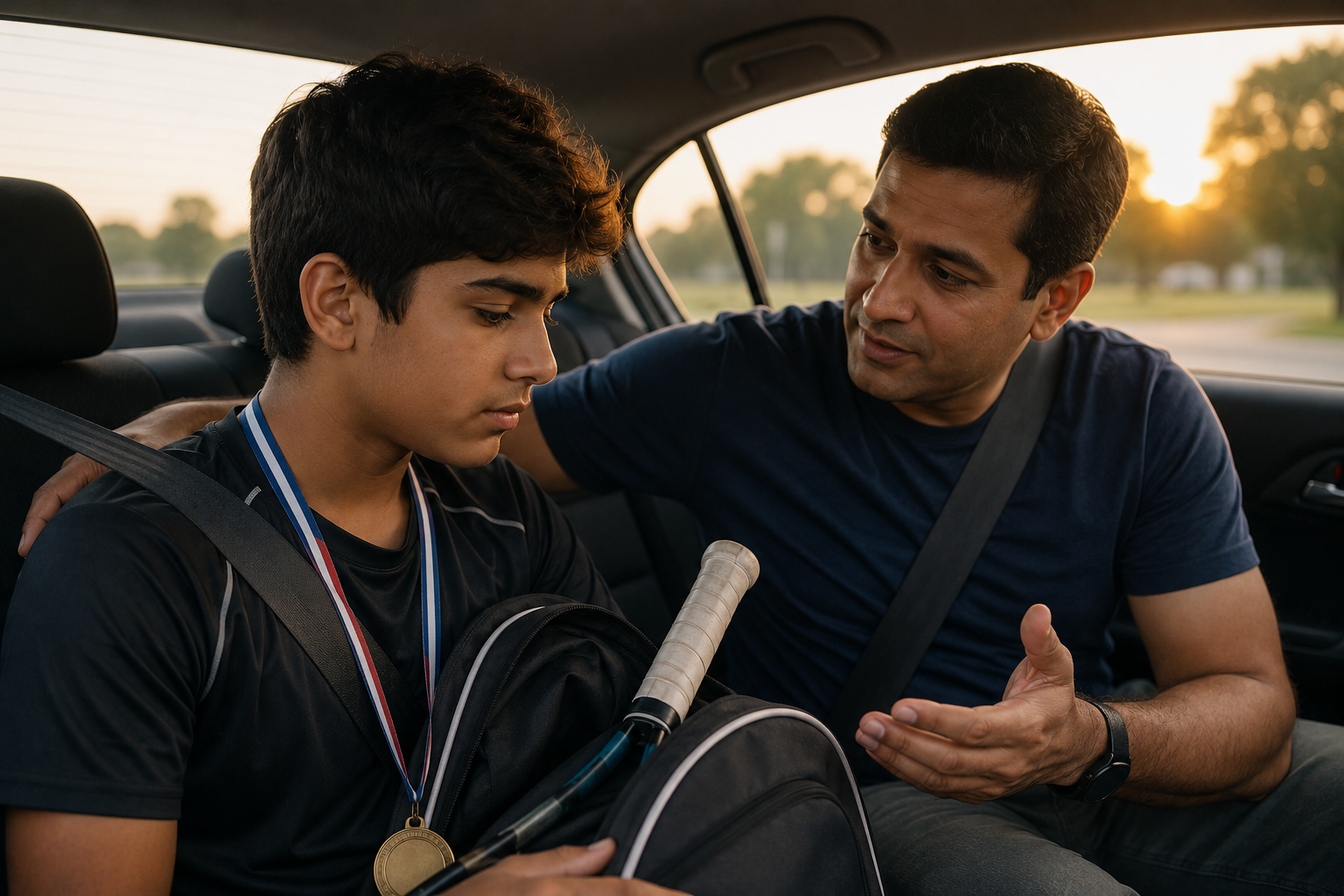
What Does It Really Mean to Support Your Athlete?
Supporting your athlete is not about finding the perfect thing to say after every match or knowing exactly what to do whenever something goes wrong. It is about knowing what your child needs from you in different moments.
After a win, celebrate their happiness without making the result the reason for the celebration. Let them enjoy what they achieved, but also notice the effort, discipline and commitment that brought them there.
After a loss, resist the urge to immediately discuss mistakes, tactics or what they should have done differently. Give them a little time to come out of the competition before starting that conversation.
When they are upset, listen long enough to understand what is actually bothering them instead of assuming you already know. When they face a problem, ask yourself whether they genuinely need your intervention or whether they need the opportunity to work through it themselves.
And when they make a decision about their sport, allow them to experience the responsibility that comes with that decision. These small differences in how you respond can shape whether your child sees sport as something they own or something that adults are constantly managing for them.
To support your athletes well, you also have to be comfortable with the fact that their journey will not always look smooth. There will be days when they are confident and days when they question themselves.
There will be selections they get and selections they miss, performances they are proud of and performances they would rather forget. Your role is not to remove every difficult experience from their path. It is to make sure they do not have to face those experiences feeling alone.
Sometimes that means encouraging them, sometimes it means listening, sometimes it means stepping back, and sometimes it simply means staying beside them without trying to turn the moment into a lesson.
The goal is to raise an athlete who can eventually think for themselves, handle disappointment, make decisions and take responsibility for their development while knowing that their parents are still there.
That is what meaningful support looks like. You are not carrying their sporting journey for them. You are helping them become capable of carrying it themselves.
Your Role Changes as Your Athlete Grows
When your child is young, being closely involved in their sport is natural. You remind them about practice, make sure they have what they need, speak to coaches, help them prepare and often make many of the decisions because they are not ready to make them independently yet.
But as an athlete grows, the same level of involvement that was helpful at eight may become limiting at fifteen. The child who once needed you to tell them what to do gradually needs opportunities to think for themselves.
Your conversations may shift from “Did you practise today?” to “How do you feel your training is going?” From solving every difficulty to asking, “What do you think you should do about it?” From checking everything they are doing to trusting that they can take responsibility for parts of their sporting journey.
This change can be difficult for parents because stepping back can sometimes feel like doing less. In reality, it is a different kind of involvement.
You are still paying attention, still caring and still being available, but you are allowing your athlete to develop judgement instead of always depending on yours.
The goal is not for parents to become less important as their athlete grows. In fact, your role becomes more meaningful when you know when to step in and when to give them room. A growing athlete needs to experience the consequences of their decisions, learn to communicate for themselves, handle setbacks and gradually become responsible for their own preparation and development.
If you continue managing every detail, they may become good at following instructions without becoming confident in making decisions. To support your athletes well, your involvement has to grow with them. Telling gradually becomes asking.
Solving becomes supporting. Monitoring becomes trusting. Managing becomes guiding. You are not walking away from their sporting journey. You are changing how you walk alongside them.
The parent who once held their hand through every step eventually becomes the person they know they can turn to when they need perspective, encouragement or simply someone who believes in them.
Your Child Doesn’t Need a Perfect Sports Parent
Your child does not need a parent who always knows what to say after a match, always understands what is going on in their mind or always gets the balance between encouragement and pressure exactly right.
Sports parenting is full of moments where you may wonder whether you should speak, stay quiet, step in or step back. You will sometimes say too much, worry too much or get caught up in a result because you care so deeply about your child.
What matters is not getting every moment right. What matters is creating enough space for your athlete to experience their sport as their own.
They need to be able to compete without feeling that every performance will be judged at home, make mistakes without believing they have disappointed you, experience losses without immediately being rescued from them and face problems with the opportunity to work out what they can do next.
These experiences are not separate from their development. They are part of how an athlete learns confidence, responsibility and independence.
To support your athletes is not to make their sporting journey easier by removing every difficult moment. It is to make sure they know they do not have to figure everything out alone. There will be days when they need your encouragement, days when they need you to listen, and days when the best thing you can give them is enough trust to let them handle something themselves.
As they grow, they will gradually carry more of the responsibility for their training, decisions, performances and goals. Your job is not to carry that responsibility for them. It is to remain close enough to guide when needed and steady enough to trust their growth.
Your child does not need you to have all the answers. They need to know that when they are figuring things out, you are still there.
How MyMentalCoach Can Help You Support Your Athlete
Being a sports parent is not about getting every conversation right. It is about understanding what your athlete needs as they grow and knowing when to encourage, when to listen, when to step back and when to guide.
Your child will have great performances, disappointing days, difficult decisions and moments when they question themselves. They need the opportunity to experience all of these while gradually learning to take responsibility for their own sporting journey.
To support your athlete is not to control that journey or remove every difficulty from it. It is to give them the confidence to compete, make mistakes, learn, solve problems and grow while knowing that you are still beside them.
At MyMentalCoach, we help young athletes develop the mental side of performance and help parents better understand how they can support that development. Our approach focuses on helping athletes build confidence, handle pressure, respond to setbacks, manage their thoughts and gradually take ownership of their performance and growth.
We also help parents understand how their involvement can either support or unintentionally interfere with this process.
If you want to understand how to support your athlete in a way that builds independence as well as confidence, book a FREE 15 minute call. Call or WhatsApp us on +91 98237 91323 and take the first step towards giving your athlete the right kind of mental support.