

Your child walks off the field after a match, and before they have even put their kit bag down, you may already be thinking, “Why did they play that shot?” “They should have done this differently.” “What happened today?”
It comes from a good place—you have driven them to early-morning practice, adjusted family schedules around tournaments, watched the losses, celebrated the wins and invested so much of yourself in their sporting journey.
But sometimes, without realising it, that care can turn into constant advice, questioning and correction. As sports psychologists at MyMentalCoach, we’ve seen how easily parents can move from supporting their child to trying to control athletes, especially when selection, performance and the future start feeling important.
The real question isn’t whether you should be involved in your child’s sport—you should. It is whether your involvement is helping your child become more confident and independent, or making them feel that every decision, mistake and result needs to be managed by someone else.
Because ultimately, your child doesn’t just need a parent who wants them to perform well; they need a parent who makes them feel safe enough to learn, make mistakes, handle disappointment and find their own way in sport.
When Support Starts Feeling Like Control
The match is over, your child is walking back with their kit bag, and before they’ve even had a chance to breathe, the questions begin: “Why did you play that shot?” “Why didn’t you listen to your coach?” “What happened in the second half?” Most parents ask these questions because they care.
You have watched the early-morning practices, driven them to training, seen the disappointment after losses and celebrated the small improvements. Naturally, you want to help.
But when every performance becomes something to analyse, every mistake needs an explanation and every training session becomes a conversation about what your child should do better, your involvement can slowly feel less like support and more like control. This is especially common when parents become highly invested in their child’s progress, selection or future in sport.
The difference isn’t about caring less; it is about how that care is expressed. To support athletes, parents need to leave enough room for their child to think, make decisions, experience disappointment and gradually take ownership of their sporting journey. Your role doesn’t have to be that of a second coach sitting in the stands.
Sometimes it is simply being the person your child knows they can turn to after a difficult training session or a disappointing match without immediately being judged or corrected.
When athletes feel trusted rather than constantly managed, they have more opportunity to develop confidence, independence and responsibility. Good support doesn’t take ownership away from the athlete; it gives them the confidence to own their journey.
Why Is It So Easy for Parents to Control Athletes Instead of Support?
Most parents don’t wake up thinking, “Today I’m going to control my child’s sport.” It usually happens quietly. You start worrying because your child has been training hard but isn’t getting selected, you see another athlete improving faster, or you feel they aren’t putting in the effort you know they are capable of.
After a while, you may find yourself asking about every session, reminding them what to practise or feeling more anxious about the next competition than they do.
The intention is usually love and protection, but when a parent’s emotions become closely tied to the result, it becomes harder to step back. That is when attempts to control athletes can begin to replace genuine support.
The child may start feeling that every decision is being watched and every performance needs to meet someone else’s expectation.
The important shift is from telling to helping them think. “You need to work harder on this” gives the athlete an instruction; “What do you think you need to work on?” gives them an opportunity to reflect and take responsibility.
This doesn’t mean parents should never guide their children or stop being involved. It means giving the athlete increasing ownership as they grow. A young athlete needs support with things they cannot yet manage alone, but they also need opportunities to make decisions, experience mistakes and learn from them. Supporting an athlete doesn’t mean doing everything for them. It means helping them gradually learn to do more for themselves.
There is a lot of information and advice out there, but the right information is the information that is useful to you right now.
Improvement comes from knowing what matters most right now for you. Let’s help our young athletes focus on what truly matters, rather than trying to work on everything at once. Do watch the reel and reflect: https://www.instagram.com/reel/Db5ChIrCero/?igsh=bmFqbmExaHZpNGpt
3 Signs You May Be Controlling Your Child’s Sport Instead of Supporting Them
1. You Talk About Their Sport More Than They Do
Notice what happens on the drive home, at dinner or during a quiet evening: does the conversation naturally move back to training, selection, rankings, fitness, mistakes or what your child should improve?
If almost every conversation eventually becomes about sport, it may be a sign that the sport is taking up too much space in your relationship. This doesn’t mean you are a bad parent or that you care too much—it may simply mean your concern has become difficult to switch off.
When parents constantly control athletes through questions, reminders and performance discussions, the child can start feeling that their value at home is connected to how they are doing in sport.
Sometimes the most supportive thing you can do is talk about school, friends, music, food, films or absolutely nothing related to sport. Your child needs a parent who knows their life beyond their performance.
2. Their Results Affect Your Mood More Than Their Own
You may notice it after a difficult match: your child has already accepted the result, but you’re still replaying the missed opportunity, wondering what went wrong or feeling upset about what could have happened.
When a loss stays with you longer than it stays with your child, or a win changes your entire mood, your emotions may have become too closely connected to their performance. This is understandable—you have invested time, money, effort and emotion into their sporting journey—but athletes can also sense when their result is affecting the atmosphere at home.
They may start feeling responsible not only for their own performance but also for keeping their parents happy.
When parents control athletes through their emotional reactions, even without saying much, the pressure can become difficult to carry. Your child should be allowed to have a bad match without feeling that they have given you a bad day.
3. You Feel the Need to Solve Every Sporting Problem
When your child has a difficult session, loses a match or struggles with a particular skill, your first instinct may be to step in—explain what went wrong, suggest what they should practise, message the coach or plan what they should do differently next time.
That instinct usually comes from wanting to help, but if you are always solving the problem, your child gets fewer opportunities to think through challenges and make their own decisions. This is where parents can unintentionally control athletes rather than support them.
Before stepping in, pause and ask yourself: “Does my child actually need me to solve this, or do they need the chance to work it out?” Giving them that space doesn’t mean leaving them alone; it means being available when they genuinely need guidance while allowing them to develop confidence, responsibility and independence.
The goal isn’t to become less involved. It’s to become involved in a way that makes your child more capable, not more dependent.
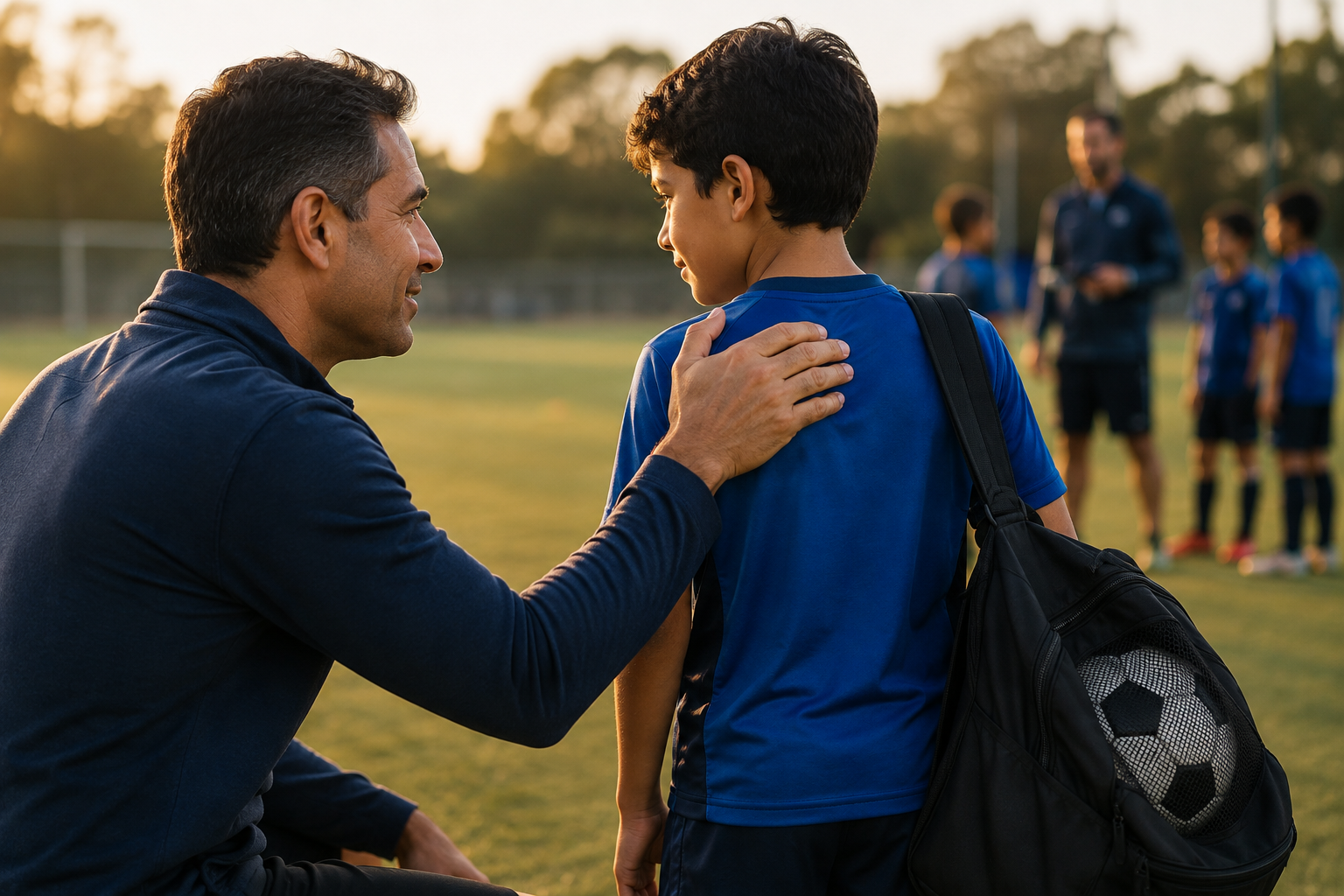
3 Practices to Support Athletes Without Controlling Them
1. Ask Before You Advise
After a match, it can be tempting to immediately point out what went wrong, especially when you have been watching closely and already have an opinion about what your child could have done differently. But the athlete may still be processing the result, replaying key moments or simply trying to come down from the intensity of competition.
Instead of starting with “You should have…”, try asking, “How did you feel about your performance?” or “Is there anything you want to work on?” This small change gives the athlete a chance to reflect before receiving someone else’s view. It builds self-awareness, decision-making and ownership because they begin identifying their own strengths and areas for improvement.
You don’t have to stop giving advice; simply learn to recognise when advice is actually needed. Sometimes the most helpful thing you can give an athlete is space to think before giving them an answer.
2. Let the Athlete Own Their Sport
At some point, an athlete needs to feel, “This is my sport. My parents are behind me, but this journey belongs to me.” Parents naturally provide the practical support—getting them to training, arranging equipment, encouraging them after a difficult session
But gradually, the athlete should also have a say in their goals, preparation, training attitude, communication with their coach and how they respond to mistakes. This is where autonomy matters.
When athletes have opportunities to make age-appropriate decisions and experience the results of those decisions, they begin developing responsibility and confidence rather than waiting for a parent to tell them what to do next.
Instead of “You need to practise this more,” try “What did you notice about your game today?” You are still involved, but you are giving your child room to become the person responsible for their own sporting journey. Your child doesn’t need you to run their sport. They need to know you’re there while they learn to run it themselves.
3. Separate Your Emotions From Their Performance
Your child loses a match, and you feel disappointed. They get selected, and you feel incredibly proud. They have a poor performance, and suddenly the journey home feels heavy.
These reactions are natural because you care deeply about your child, but athletes notice a parent’s emotional response even when nothing is said directly.
The important distinction is between “I care about your performance” and “Your performance determines how I feel about you.” When a child begins feeling responsible for their parent’s mood after every result, sport can start carrying an emotional weight it was never meant to carry.
After a difficult match, sometimes the most supportive response is simply, “I know that was tough. I’m here if you want to talk.” It tells the athlete that they are safe to experience disappointment without having to immediately explain, fix or defend their performance. Your child needs a parent after a difficult performance, not another coach.
What If Your Child Doesn’t Want Your Advice?
Sometimes your child comes home from training, puts their kit down and simply doesn’t want to talk about the match. They may say, “I’m fine,” change the subject or ask for some time alone.
As a parent, that can be difficult because you are trying to understand what happened and make sure they are okay. But not wanting to talk immediately doesn’t mean they don’t value your support.
They may still be processing a disappointing performance, feeling frustrated with themselves or simply need time for their emotions to settle.
When parents keep asking questions or immediately start analysing what went wrong, even genuine concern can start feeling like pressure. Instead, give them the freedom to come to you when they are ready.
A simple “That’s okay. Whenever you want to talk, I’m here” can communicate more support than a long conversation they weren’t ready to have.
Learning when to step back is also an important part of not trying to control athletes. You don’t need to know every detail of their training session, understand every emotion immediately or have an answer for every problem.
Listen when they choose to share, respect their need for space and make it clear that your support is still available. Over time, this builds trust because your child knows they can come to you without worrying that every conversation will turn into advice, correction or another discussion about performance.
Being a supportive sports parent isn’t about always knowing what to say. Sometimes it is about knowing when your child needs your words and when they simply need you to be there.
When Parents Should Step In
There is a difference between letting your child experience a difficult moment and leaving them to handle something beyond their emotional or practical capacity. Good sports parenting isn’t about always stepping back; it is about developing the judgement to know when your involvement is useful.
If your child is struggling with their emotional wellbeing, feeling unsafe, facing unhealthy pressure, or dealing with a situation they genuinely cannot navigate alone, your role changes.
At those moments, being the parent means providing the stability, guidance and protection they may not yet be able to provide for themselves.
The interesting part is that stepping in does not have to mean taking over. You can help without becoming the decision-maker for everything. Listen to what your child is experiencing, understand what they need, and involve the right people when necessary while still allowing the athlete to have a voice in what happens next.
This is one of the most important balances in sports parenting: protect without overprotecting, guide without directing every move, and be involved without taking ownership of the journey. The aim is not to control athletes less; it is to help them become capable of handling more while knowing that their parents will step forward when it truly matters.
How MyMentalCoach Can Help Sports Parents
Your child doesn’t need you to manage every part of their sporting journey. They need a parent who can listen without immediately correcting, encourage without comparing, stay steady when things don’t go their way and give them room to make decisions of their own.
Trying to control athletes may come from love and concern, but too much involvement can slowly take away their sense of ownership. Supporting athletes is not about becoming less interested or less involved; it is about understanding when your involvement helps and when it takes away an opportunity for your child to learn.
The strongest support often comes from being present without taking over—letting your child know that their performance can change, their results can change, but your relationship with them doesn’t. Your child needs you in their corner—not in control of their game.
At MyMentalCoach, we help sports parents understand the mental side of their child’s sporting journey so they can support athletes without becoming another coach.
Through initiatives such as Sports Parents Corner, parents can learn to manage their own emotions around competition, communicate without adding pressure, handle losses and non-selection, build confidence and encourage greater independence in their child. If you would like to understand how to support your athlete without trying to control athletes, you can book a Free 15-minute call by connecting with MyMentalCoach at +91 91122 20823.