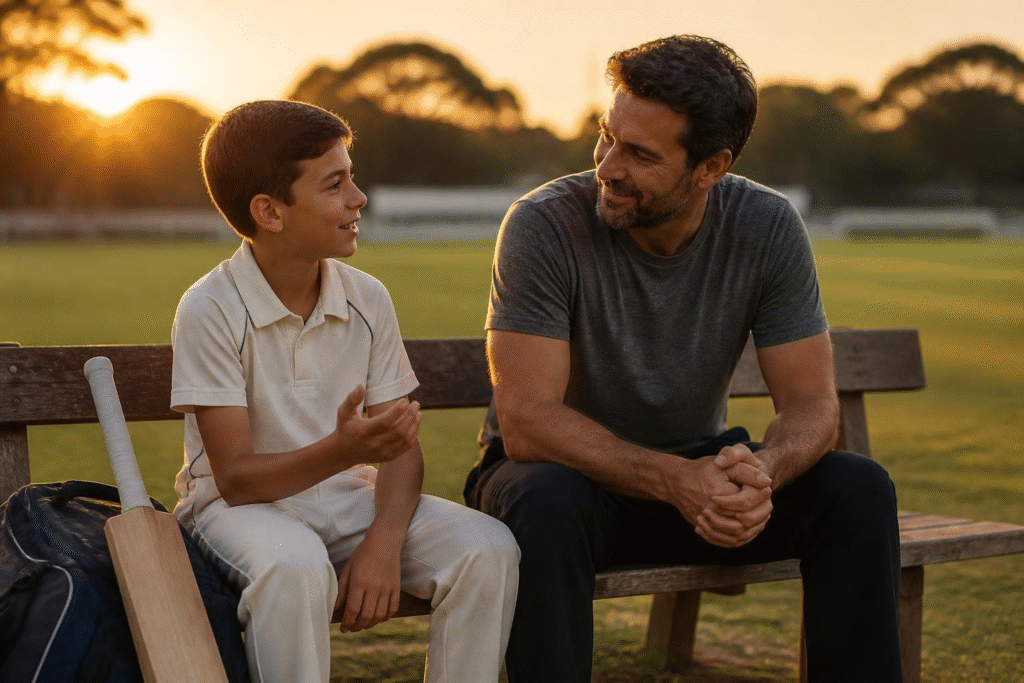
Every sports parent knows the question that follows a match, and almost every child knows the answer that ends it. “How did it go?” “Fine.”
That one word can hold a lost final, a harsh comment from the coach, a quiet fear of letting you down or simply a mind too tired to explain. If you ask sports psychologists, they will tell you that when children stop sharing about their game, it is rarely about the game itself.
At MyMentalCoach, We have noticed this pattern in families across every sport, from cricket nets and badminton courts to swimming pools and football grounds, and the reassuring truth is that it can be turned around.
This blog explores why sports conversations fade between parents and young athletes, and how a few thoughtful changes at home can help your child want to talk to you again.
When the Stories After Every Match Suddenly Stop
There was a time when your child would climb into the car still buzzing, telling you about every wicket, every goal, every point they won and every one they almost did. You heard about the coach’s words, the teammate who made them laugh, the shot they could not wait to try again.
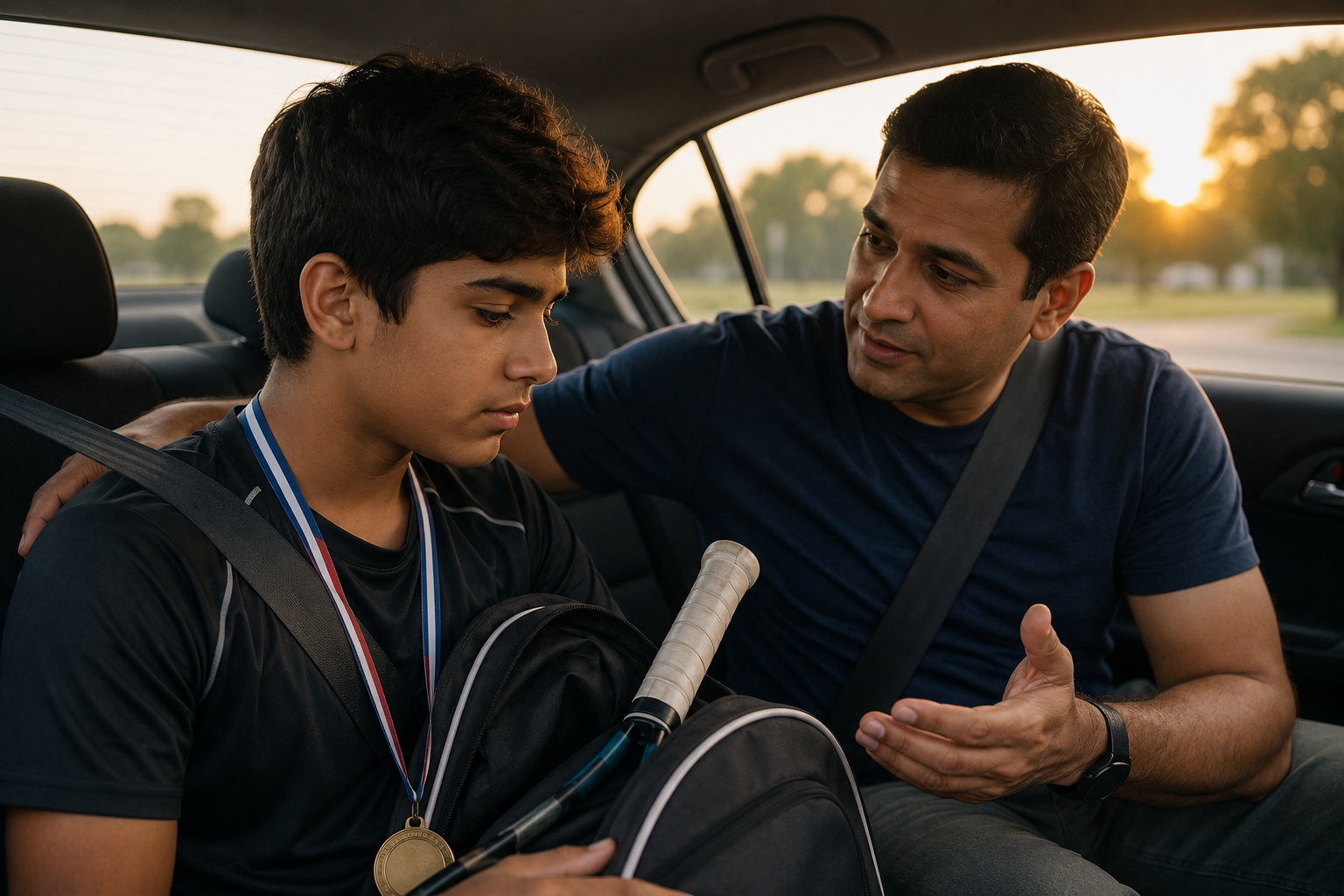
And now, the same drive home is quiet. You ask how it went and get a “fine” or an “okay,” followed by earphones and a window to stare out of. For many parents, this shift feels confusing and even a little painful.
You wonder whether something happened, whether they are losing interest, or whether you have somehow been shut out of a part of their life you once shared so closely.
When sports conversations suddenly stop, it is almost always a signal, not a rejection. Your child has not stopped needing you. Something in the way the sport feels, or the way talking about it feels, has changed for them.
The good news is that this silence can be understood, and the connection can be rebuilt. Once you see why children go quiet, you can start reopening sports conversations in three simple ways that bring the warmth, trust and stories back to those drives home.
Why Do Children Stop Sports Conversations With Parents?
1. Every Conversation Feels Like an Evaluation
Most parents ask about the match because they care, but a child does not hear care when the first question is about the catch they dropped or the serve they double faulted. They hear a review.
And by the time they reach home, they have usually already had one, from the coach at the ground, from teammates in the dressing room, and most harshly, from themselves on the walk back to the car.
When home becomes the second review session of the day, sports conversations stop feeling like sharing and start feeling like reporting, and no child wants to report on a bad day twice. What makes it harder is that children rarely tell parents this directly.
Instead, they quietly learn that saying less means being questioned less. Underneath that silence is usually not anger but worry: the worry that you are disappointed, that the fees, the early mornings and the weekend travel have become something they now owe you in results.
For a young athlete, keeping quiet can feel safer than being honest about a tough game, because honesty invites more questions and silence at least ends the conversation. The shift we encourage parents to make is simple but powerful.
Let the coach handle the correction, and let home be the one place where your child can talk about the game without being assessed. When children feel that the person listening is on their side rather than grading them, sports conversations return on their own, often more openly than before.
2. Emotional Overload After Games
When a match ends, the scoreboard stops but your child’s mind does not. Their heart is still racing, the last few points are replaying on a loop, and emotions like frustration, relief, embarrassment or even excitement are all arriving at once.
A child in this state is not ready to explain, analyse or defend anything, which is why the car ride home so often turns into silence or short, irritated replies. It is not that they do not want to talk to you. It is that they have not yet made sense of what they are feeling, and being asked to put it into words too soon feels like pressure on top of an already heavy moment.
This is true after wins as well, because even a good performance can leave a child drained, overthinking one mistake or anxious about what comes next.
When parents ask questions immediately, children often shut down simply to get some space, and over time they begin to avoid sports conversations altogether because they connect them with that overwhelmed feeling.
What helps most is giving the emotions time to settle before the discussion begins. A calm presence, a snack, some quiet or their favourite music tells your child that you are with them, not waiting for answers.
Once they have had the space to process the game in their own way, they are far more likely to come back to you on their own, and those sports conversations will feel lighter, more honest and far more meaningful for both of you.
3. The Sport Stops Feeling Like Theirs
Every child starts a sport for their own reasons. Maybe it was the joy of hitting the ball cleanly, the fun of being with friends, or the simple thrill of running onto the field. Somewhere along the way, as tournaments, selections and rankings enter the picture, the parent’s hopes can quietly grow louder than the child’s own.
It rarely happens on purpose. It shows up in small ways, like a parent who knows the rankings better than the child, who feels a loss more deeply than the player, or who plans the next season before asking whether the child still enjoys it.
Children notice this very quickly. When they sense that the results matter more to you than to them, the sport begins to feel like something they are doing for you rather than something they love.
That is when many young athletes pull back from sports conversations, not because they have stopped caring, but because silence is the only way they can protect the part of the game that still feels like their own. Talking about it with you starts to feel like handing it over.
The most powerful thing a parent can do is give that ownership back. Ask what they enjoy, what they want from the sport and what they are proud of, and truly accept their answers even when they differ from your expectations.
When a child feels the game belongs to them again, sports conversations naturally find their way back home, because now they are sharing their journey, not reporting on yours.
3 Ways to Communicate With Your Child About Sports
1. Listen More, Talk Less
The quickest way to bring sports conversations back is often to say less, not more. Children open up when they feel truly heard, and that means listening with your full attention, without planning your next point or waiting for the right moment to give advice.
Instead of questions that search for mistakes, try questions that invite your child to share their experience, such as asking what the most fun part of the day was or how they felt out there. These questions have no right or wrong answer, so your child does not have to defend anything, and they get to decide what matters most about their own game.
Once they start talking, resist the urge to interrupt, correct or add what you noticed from the stands. Even a small “but you should have” can close a door that took a lot of courage to open. It can feel strange at first to simply nod, stay curious and let a story be incomplete or different from what you saw, yet this is exactly what builds trust.
A parent who shifts from asking why a shot was missed to asking what their child enjoyed today often notices the difference within days, because the child no longer feels judged. When children know you are listening to understand rather than to fix, sports conversations stop feeling like a test and start feeling like time with someone who is genuinely on their side.
2. Choose the Right Time
Even the kindest words can land badly if they come at the wrong moment, which is why timing matters so much in sports conversations. Right after a match, your child is still carrying the emotions of the game, and any talk about performance can feel like pressure before they have had a chance to breathe.
A helpful approach is to wait a full day before discussing how they played, giving both of you the space to see the game more calmly. Until then, let the car ride home be a light and easy space, with their favourite music, a snack or a relaxed chat about anything other than the match.
Most importantly, let your child be the one to start the conversation. When they bring it up on their own, they are ready to share, and what they choose to talk about will tell you far more than any question could.
If you feel the need to say something, keep it simple and warm with words like “I love watching you play.” This one sentence tells your child that your joy does not depend on the scoreboard, and that is often the very reassurance they need.
When children learn that talking about the game will always happen on their terms and at their pace, sports conversations begin to feel safe again, and you will find them coming to you far more often than before.
3. Focus on Effort, Not Results
Children can control how hard they try, how they carry themselves and how they support their team, but they cannot always control the result. When most of the attention at home goes to scores, wins and selections, children begin to feel that they are only as good as their last match, and that is a heavy weight for any young athlete to carry.
Shifting your focus to effort, attitude and teamwork changes the entire tone of sports conversations, because it shows your child that you see the parts of their game that truly belong to them.
Noticing small improvements matters just as much, whether it is a steadier serve, better focus after a mistake or more confidence in a tough moment, because these are the signs of real growth long before they show up on the scoreboard.
Simple, honest words like “I noticed how hard you worked on defence” or “You never gave up, even when you were behind” tell your child that you were paying attention to who they were on the field, not just what the result was.
Over time, this helps them understand that their worth is not decided by winning or losing. When children feel valued for their effort and character, they stop fearing what you will say after a game, and sports conversations become something they look forward to rather than something they avoid.
What NOT to Say to Your Child After a Game
Most parents never mean to hurt their child with their words, yet some of the most common lines after a match can quietly shut down sports conversations for weeks. Asking “Why didn’t you try harder?” tells a child that you did not see the effort they believe they gave. Saying “You should have done better” reminds them of a disappointment they are already feeling deeply.
Comparing them with a teammate by pointing out how well someone else played makes them feel measured and found lacking, often in front of the very people they want to be accepted by.
And for sure the heaviest of all is “We’re paying so much for this,” because it turns their sport into a debt. From that moment, every match feels like a bill they have to repay with results. Children rarely argue back when they hear these words. They simply learn to share less, and the silence grows.
What your child needs after a game is not a verdict but reassurance. Words like “I’m proud of you” tell them that your pride does not rise and fall with the scoreboard. Asking “Did you have fun?” reminds both of you why they started playing in the first place and keeps joy at the centre of the sport.
Most of these words slip out not because parents mean them, but because they are speaking while still upset about the match. Learning to handle that moment of anger calmly can protect sports conversations far more than any perfect question. Watch Dr Swaroop Savanur’s video, 3 Things Sports Parents Should Do When They Get Angry, to understand how to manage your own emotions before you speak to your child.
When the time is right, a question like “What would you like to work on next?” puts your child in charge of their own growth, so improvement becomes something they choose rather than something demanded of them.
These small shifts in language may seem simple, but they change how your child feels walking off the field and into the car. When children know that the first words they hear from you will be kind, sports conversations stop feeling risky and start becoming a natural part of your time together again.
How MyMentalCoach Can Help You Bring Sports Conversations Back Home
When your child goes quiet about their sport, it can feel like you are losing a part of their world, but the connection is not lost. It simply needs a new approach.
By listening more than you speak, choosing the right time to talk and focusing on effort rather than results, you give your child the safety they need to open up again. These changes may feel small, yet together they tell your child that home is a place where they are understood, not evaluated.
Slowly, the stories return, the car rides feel lighter and sports conversations become something you both enjoy once more. Always remember that your child does not need a coach at home. They need a parent who listens.
At MyMentalCoach, We work closely with young athletes and their parents to understand what is really happening beneath the silence. Through mental conditioning, we help children manage the emotions that come with competition, build resilience after tough games and grow the kind of confidence that does not depend on the scoreboard.
Just as importantly, he guides parents on how to support their child without adding pressure, so that sports conversations at home feel natural, honest and connected again. Whether your child is just starting out or competing at a higher level, the right mental support can make both the sport and your relationship stronger.
If your child has stopped talking about their game and you are not sure where to begin, you can Book a Free 15-Minute Call with Dr Swaroop by reaching out on +91 9823791323.