

Many sports parents believe confidence is built by encouraging words before a match or celebrating a win afterwards. But after working with thousands of athletes over the last two decades at MyMentalCoach, one thing has become clear—how sports parents shape their child’s confidence has far less to do with big motivational talks and far more to do with the small, everyday moments that surround competition.
The car ride to the venue, your reactions from the sidelines, your facial expressions after a mistake, and the first conversation after the game all leave a lasting psychological imprint on a young athlete.
As sports psychologists, we’ve seen talented children lose confidence despite years of training, while others develop remarkable resilience simply because they know their parents are their safest place, regardless of the result.
In this guide, we’ll explore the subtle yet powerful ways parents influence confidence before, during, and after every game—and the simple changes that can help your child compete with greater belief, resilience, and a lifelong love for sport.
How Sports Parents Shape Their Child’s Confidence Before, During and After the Game
Before the Game: The Foundation of Confidence
One of the biggest ways how sports parents shape their child’s confidence is through the moments before the competition even begins. The car ride to the venue, the expectations you communicate, and even your facial expressions or tone of voice all influence how your child feels before stepping onto the field.
When parents create emotional safety instead of performance pressure, focus on effort rather than outcomes, and remain calm in their own behaviour, children arrive feeling confident, supported, and ready to compete instead of worrying about making mistakes or disappointing their parents.
During the Game: Your Presence Matters More Than Your Advice
During the competition, how sports parents shape their child’s confidence often comes down to how they behave on the sidelines. Constant instructions, visible disappointment after mistakes, or celebrating only successful moments can make children second-guess themselves and play with fear instead of freedom.
By letting coaches coach, trusting the training process, and staying calm and composed, parents become a source of emotional stability. Remember, children naturally mirror their parents’ emotions—when they see confidence and composure in you, they’re far more likely to stay confident and composed themselves under pressure.
After the Game: The Conversation They Remember Most
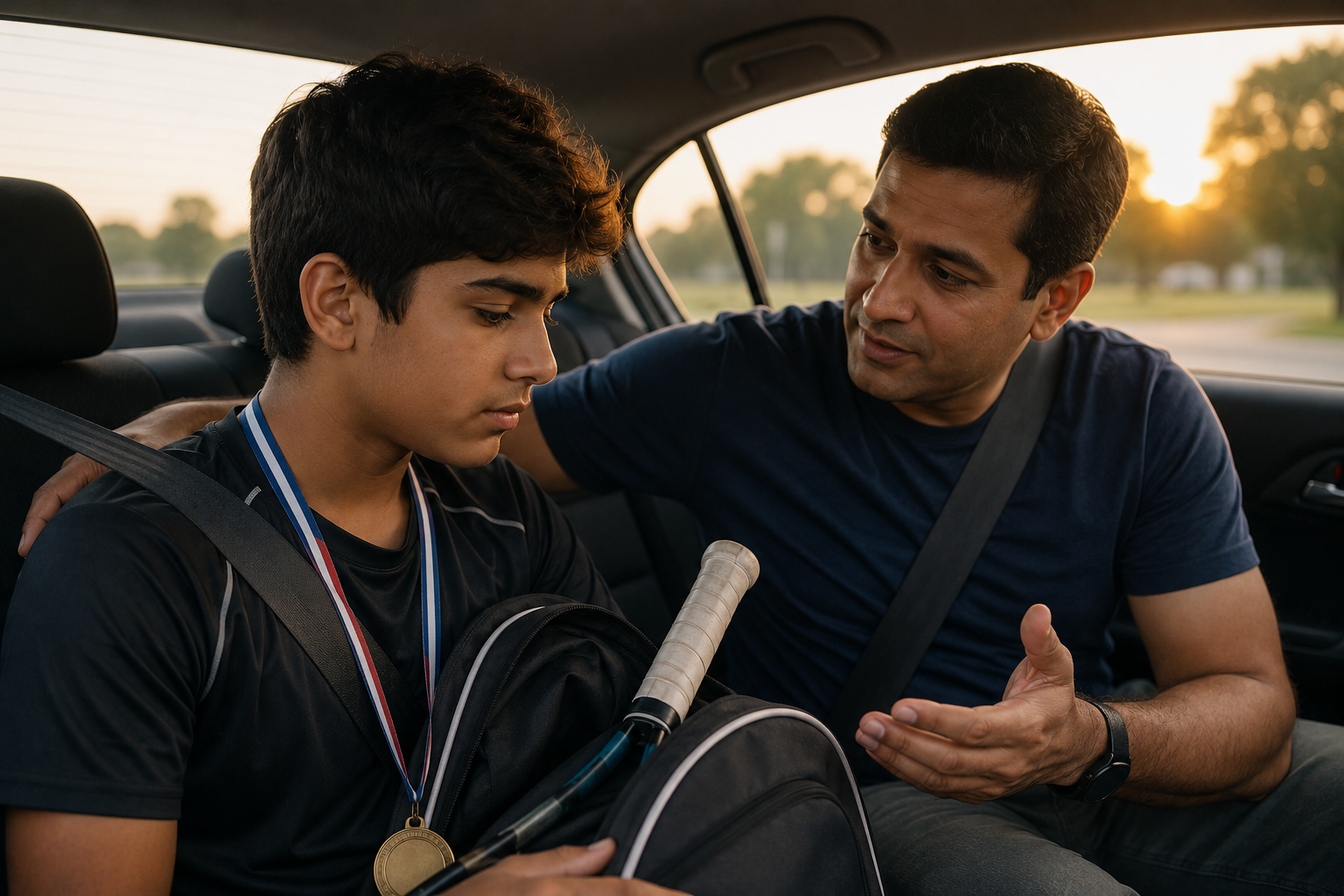
The moments immediately after a competition are often when how sports parents shape their child’s confidence has the greatest impact. In the first few minutes, children aren’t looking for analysis—they’re looking for acceptance, reassurance, and emotional connection.
Whether they win or lose, celebrate their effort, courage, and learning rather than just the result, and avoid praise that makes success seem like the only measure of their worth. After a loss, acknowledge their disappointment, encourage thoughtful reflection when they’re ready, and remind them that your support never depends on the scoreboard.
If you’re wondering what your child truly needs after a competition, What to Say to Your Child After a Match by Dr. Swaroop Savanur offers practical, sports psychology-backed insights that every sports parent can immediately apply.
3 Common Parent Behaviours That Quietly Reduce Confidence
1. Comparing Your Child with Other Athletes
Imagine your child has just finished a hard-fought match, and on the drive home they hear, “Did you see how confidently Aarav played?” or “Your teammate never gives up like that.” Although the intention may be to motivate, what they often hear is, “I’m not good enough.” From that moment, the focus shifts from improving their own game to constantly measuring themselves against others.
Confident athletes don’t grow because they’re the best in the group—they grow because they’re encouraged to become a better version of themselves after every training session and every match.
2. Turning Every Match into a Result Report
Many parents don’t realize that the first few questions after a game shape what their child believes is important. If every conversation starts with “Did you win?”, “How many points did you score?”, or “What was your ranking?”, children begin to believe that their value rises and falls with the scoreboard.
Eventually, they stop playing to express their skills and start playing not to disappoint their parents. Instead, ask questions like, “What part of your game are you proud of today?” or “What did you learn that will help you in your next competition?” These conversations build confidence because they teach children that growth matters even on difficult days.
3. Coaching Before They’ve Processed the Match
One of the most common mistakes I see in sports psychology is parents turning into coaches the moment the match ends. Before the child has had a chance to drink water or process their emotions, they’re hearing, “You should have attacked more,” “Why didn’t you follow the coach’s plan?” or “You kept making the same mistake.” What parents see as helpful feedback often feels like another reminder that they weren’t good enough.
After a tough game, children don’t need a technical review—they need to know they’re still supported. Once emotions settle, they’ll be far more open to reflecting on what happened and learning from it. This simple shift strengthens confidence instead of weakening it.
Top 3 Parent Habits That Build Confidence
1. Become the One Person They Never Have to Perform For
Every athlete has coaches, selectors, opponents, and scoreboards judging their performance. Home shouldn’t feel like another place where they have to prove themselves. When your child walks towards you after a match, they should never have to wonder, “Will Mom or Dad be upset with me?” A smile, a reassuring hug, or simply saying, “I loved watching you compete today,” tells them that your relationship is bigger than today’s result.
Children who feel emotionally secure at home are more willing to play boldly because they know one bad game won’t change how they’re seen.
2. Notice the Moments Nobody Else Claps For
The scoreboard only tells you who won. It doesn’t tell you that your child fought back after losing the first set, stayed positive after making three mistakes in a row, or kept encouraging a teammate despite having a difficult day themselves. Those are the moments that truly shape an athlete’s confidence.
Instead of saying, “You played brilliantly,” tell them exactly what impressed you: “I was proud of how you stayed calm after that missed shot,” or “You didn’t give up even when the match became difficult.” When parents notice these invisible wins, children begin valuing qualities that help them succeed in the long run, not just on the scoreboard.
3. Let Them Own Their Sporting Journey
It can be tempting to step in after every setback—speaking to the coach, analysing every mistake, or immediately suggesting what they should have done differently. While it comes from a place of care, it also sends the message that they need someone else to solve their problems. Instead, give them space to think first.
Ask, “How did the match feel from your side?” or “What would you like to work on before your next competition?” When children are trusted to reflect, make decisions, and take responsibility for their own progress, they develop something far more valuable than confidence for one game—they develop belief in themselves for every challenge that follows.
How MyMentalCoach can help?
Understanding how sports parents shape their child’s confidence is not about becoming a perfect parent—it’s about becoming a more aware one.
Confidence isn’t built through one motivational speech before a match or one memorable victory. It’s built in the everyday moments that often go unnoticed: the car ride to practice, your reaction after a mistake, the conversation after a loss, and the reassurance you offer regardless of the scoreboard.
When children know they are valued for their effort, character, and willingness to learn—not just their results—they develop the kind of confidence that helps them perform under pressure and continue enjoying their sport for years to come. Every interaction you have with your child is an opportunity to either strengthen or weaken that confidence. Choose to make it count.
At MyMentalCoach, we work closely with athletes and sports parents to build the mental side of performance together. Through our Sports Parents Program, expert-led workshops, and evidence-based mental training programs, we help parents understand how their words, emotions, and behaviours influence their child’s confidence, resilience, and long-term sporting journey.
If you’re looking to support your child without adding pressure, our team can guide you with practical, psychology-backed strategies tailored to your family’s needs. To learn more, visit MyMentalCoach or book a FREE 15-minute consultation with one of our experts by calling +91 98237 91323. Together, let’s help your child build confidence that lasts far beyond the next game.